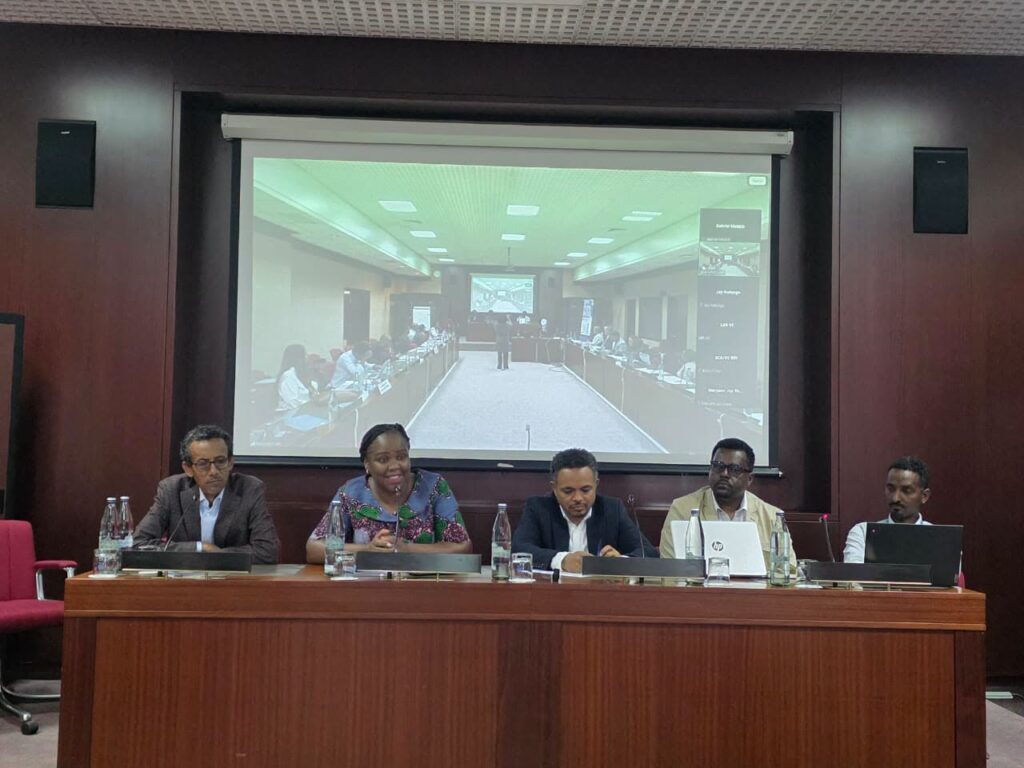
Dans le cadre d’une initiative majeure visant à combler le fossé entre la recherche en matière d’éducation et la mise en œuvre des politiques, Mme Teresa Omondi-Adeitan, directrice exécutive adjointe et responsable des programmes de FAWE Afrique, a participé, le 3 juillet 2026, au Dialogue de haut niveau sur l’apprentissage et les politiques en Éthiopie. Organisé par le pôle KIX Africa 19 du Partenariat mondial pour l'éducation (GPE) et le CRDI dans les locaux de la CEA à Addis-Abeba, ce dialogue a réuni un parterre prestigieux de décideurs politiques, de chercheurs et de partenaires du développement afin de renforcer la transposition des résultats de la recherche en politiques éducatives concrètes.
Ce dialogue a réuni des représentants du ministère éthiopien de l’Éducation, de l’ambassade du Canada en Éthiopie, de l’IICBA de l’UNESCO, de l’Observatoire KIX du GPE à l’université d’Addis-Abeba, de l’IIEP de l’UNESCO, de Geneva Global et de BIELDS. Ce forum a offert une tribune permettant d’échanger des points de vue sur la manière dont la recherche et l’innovation peuvent favoriser des améliorations systémiques dans le domaine de l’éducation, en particulier pour les apprenants marginalisés et déplacés. Mme Tricia Wind, responsable du programme GPE KIX au CRDI, a souligné l’urgence de la situation en déclarant : “ Il est temps de synthétiser l’ensemble des travaux de recherche et de les mettre en œuvre de manière collaborative. ”
Mme Omondi-Adeitan a partagé des enseignements convaincants tirés du modèle « Tuseme » de FAWE, qui a fait ses preuves et dont l’impact s’est révélé remarquable dans des contextes très variés. Cette approche d’autonomisation, qui recourt au théâtre et aux arts participatifs, crée des espaces sécurisants permettant aux jeunes d’analyser les défis, de faire entendre leur voix et de s’engager de manière constructive dans la recherche de solutions. Dans les camps de réfugiés, ce modèle a permis aux élèves de soulever des questions cruciales, d’influencer les décisions et de participer activement à l’élaboration de leur parcours éducatif. La discussion a mis en évidence la manière dont les clubs « Tuseme » sont devenus des catalyseurs de changement, permettant aux apprenants d’aborder des questions allant de la violence de genre à l’accès aux supports pédagogiques.
Le dialogue a également porté sur la nécessité impérative de déployer à grande échelle des interventions qui ont fait leurs preuves et d’en garantir la pérennité à long terme. Mme Omondi-Adeitan a souligné que, pour obtenir un impact à grande échelle, “ nous devons institutionnaliser et investir dans des approches éprouvées telles que Tuseme et la pédagogie sensible au genre ”. Ses propos ont trouvé un écho auprès des participants, qui ont reconnu la nécessité d’aller au-delà des projets pilotes pour parvenir à une intégration systémique. La discussion a mis en évidence l’importance de cadres politiques qui soutiennent l’adoption de modèles fondés sur des données probantes et garantissent que les investissements dans la recherche en éducation se traduisent par des améliorations concrètes pour les apprenants.
Le Dialogue sur l’apprentissage et les politiques en Éthiopie marque une étape décisive dans le passage des données factuelles à l’action dans le domaine de l’éducation en Afrique. Alors que le FAWE continue de démontrer l’efficacité du modèle Tuseme pour autonomiser les apprenants et renforcer les systèmes éducatifs, ce dialogue a souligné l’impératif d’un engagement politique et de partenariats institutionnels. En réunissant des décideurs politiques, des chercheurs et des praticiens, ce forum a donné l’élan nécessaire aux changements systémiques indispensables pour garantir que chaque enfant, y compris ceux vivant en situation de réfugiés ou de déplacement, ait accès à une éducation inclusive et de qualité. “ Pour obtenir un impact à grande échelle et garantir la pérennité à long terme, nous devons institutionnaliser les approches qui ont fait leurs preuves et y investir ”, a conclu Mme Omondi-Adeitan, exprimant ainsi une vision qui guidera le plaidoyer et les programmes du FAWE dans les années à venir.