KAMPALA, Ouganda - Au cours de la semaine du 4 au 10 mai, une délégation de haut niveau de la République du Zimbabwe a effectué une visite de référence en Ouganda afin de tirer des enseignements de l'une des innovations les plus prometteuses en matière d'enseignement supérieur en Afrique : le Certificat d'accès à l'enseignement supérieur (HEAC). La visite, menée dans le cadre de la phase II du programme du FAWE et de la Fondation Mastercard, visait à comprendre comment l'Ouganda a conçu, institutionnalisé et mis à l'échelle une “quatrième voie” d'accès à l'enseignement supérieur, permettant à des jeunes gens compétents qui seraient autrement exclus d'accéder et de réussir à l'université, en particulier dans les domaines des sciences, de la technologie, de l'ingénierie et des mathématiques (STEM).
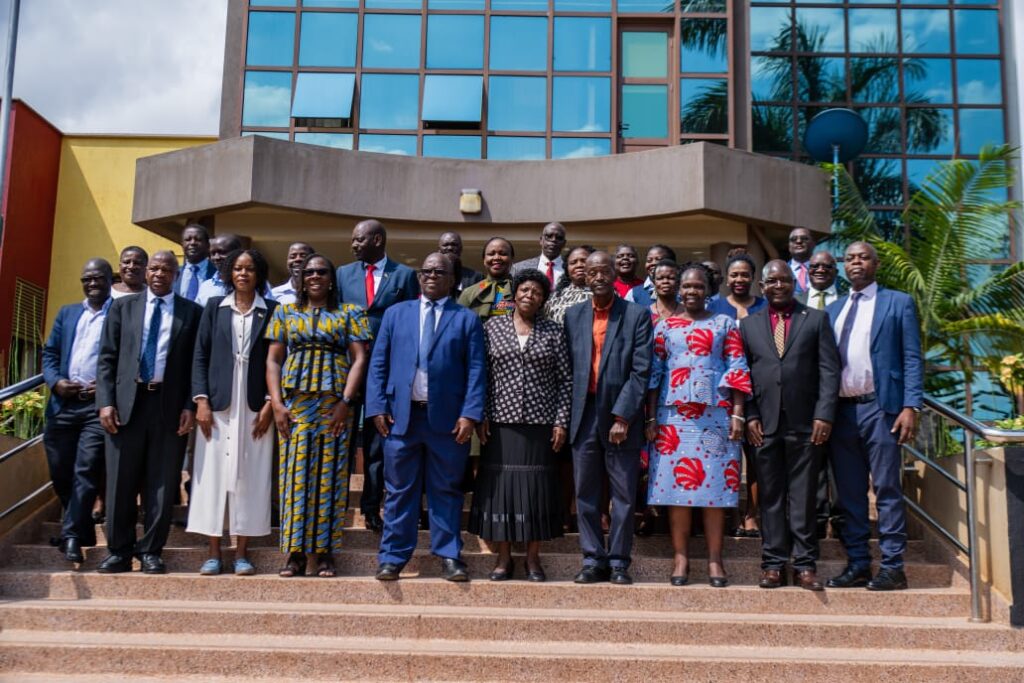
La délégation zimbabwéenne était conduite par le Professeur Fanuel Tagwira, Secrétaire permanent du Ministère de l'enseignement supérieur et tertiaire, de l'innovation, des sciences et du développement technologique, et rejointe par le Professeur Kuzvinetsa Dzvimbo, Directeur général du Conseil zimbabwéen pour l'enseignement supérieur (ZIMCHE). En Ouganda, la délégation s'est entretenue avec le Professeur Mary J. N. Okwakol, Directrice exécutive du Conseil national pour l'enseignement supérieur (NCHE Uganda), et son équipe, ainsi qu'avec les responsables du FAWE Afrique et du FAWE Ouganda. Etaient également présents la Directrice exécutive du FAWE Afrique, le Dr Martha Muhwezi, la Directrice exécutive adjointe du FAWE Afrique, Teresa Omondi-Adeitan, la Directrice exécutive du FAWE Zimbabwe, Lydia Madyirapanze, la Présidente du FAWE Ouganda, Mme Margaret Atom Mugenyi, et la Directrice exécutive, Mme Susan Opok Tumusiime, ainsi que des représentants de cinq universités zimbabwéennes et d'équipes techniques clés.
Dans toute l'Afrique, le défi n'est pas un manque de talents, mais plutôt des systèmes éducatifs qui manquent de flexibilité pour les accueillir. La HEAC se présente comme une solution africaine locale, élaborée grâce à l'alignement des politiques, à des partenariats universitaires et à un soutien académique ciblé. Comme l'a souligné le professeur Fanuel Tagwira dans son allocution, “aucun étudiant qualifié ne devrait être laissé pour compte en raison de problèmes structurels”. Renforçant la vision nationale du Zimbabwe qui consiste à ne laisser personne ni aucun endroit de côté, il a ajouté : “Nous devons porter le fardeau des enfants qui n'ont pas les moyens de s'éduquer.” Le professeur Kuzvinetsa Dzvimbo a souligné le changement plus large nécessaire dans l'enseignement supérieur, observant que “des avancées telles que l'IA remettent déjà en question les hypothèses fondamentales de nos universités et la façon dont nous préparons les étudiants pour l'avenir.”
La délégation comprenait des hauts responsables issus de l'ensemble du secteur de l'enseignement supérieur du Zimbabwe :
– Professeur Fanuel Tagwira, secrétaire permanent au ministère de l'Enseignement supérieur et de la Formation continue (chef de délégation)
– Professeur Kuzvinetsa P. Dzvimbo, directeur général de ZIMCHE
– Professeur Regis Chireshe, directeur général chargé de l'assurance qualité, ZIMCHE
– Dr Christopher Mandizvidza, directeur du service Enregistrement et accréditation, ZIMCHE
– Dr Tavagwisa Muziri, doyenne de l’Université des femmes d’Afrique
– Dr Chipo Shonhiwa, doyen de la Faculté des sciences de l'Université des sciences de l'éducation de Bindura
– Dr Joyce Ndlovu, doyenne de la Faculté des sciences naturelles et des mathématiques de l'Université technologique de Chinhoyi
– Dr Action Nechibvute, vice-doyen de l'Université de technologie de Chinhoyi
– Professeur Lwazi Sibanda, doyen exécutif de l'Université nationale des sciences et technologies
– Dr Tinashe Zishiri, responsable des inscriptions à l'université d'État des Midlands
La visite d'évaluation comparative s'est étendue au-delà du dialogue politique pour inclure un engagement sur le terrain à l'université de Busitema, l'un des établissements ougandais qui a piloté l'HEAC. Selon le professeur Paul Waako, vice-chancelier de l'université de Busitema, l'HEAC est “de loin la plus grande innovation dans l'enseignement supérieur en Ouganda”. La délégation a examiné l'innovation là où elle comptait le plus, en s'engageant directement auprès des professeurs, des systèmes administratifs et des étudiants dont la vie a été transformée grâce à cette voie. L'engagement a été renforcé par la présence de M. Ochira John Lakony, commissaire adjoint chargé de l'enseignement universitaire au ministère ougandais de l'éducation et des sports. Cette visite sur le terrain a permis à l'équipe zimbabwéenne de voir comment la politique rencontre la pratique, comment les systèmes sont testés et affinés, et comment l'Afrique peut construire des parcours inclusifs et évolutifs vers l'enseignement supérieur en apprenant ce qui fonctionne et en l'adaptant à différents contextes. Le FAWE a également célébré les progrès de l'alphabétisation en Ouganda, partageant la reconnaissance des niveaux d'alphabétisation en progression dans le pays comme un témoignage de la puissance de l'action collective et de l'investissement dans l'éducation de qualité. Le FAWE a réaffirmé que l'alphabétisation reste le fondement de l'autonomisation des filles et des femmes, libérant leur potentiel pour diriger et transformer leurs communautés. La visite d'évaluation comparative s'est conclue par un engagement renouvelé des deux nations à continuer de traduire les solutions africaines éprouvées en systèmes nationaux qui élargissent l'accès à grande échelle, en veillant à ce que des milliers de jeunes qui, autrement, resteraient exclus de l'enseignement supérieur, bénéficient de voies structurées et dignes pour accéder à des opportunités.