AU Day of School Feeding 2026 – FAWE Side Event, Gaborone, Botswana
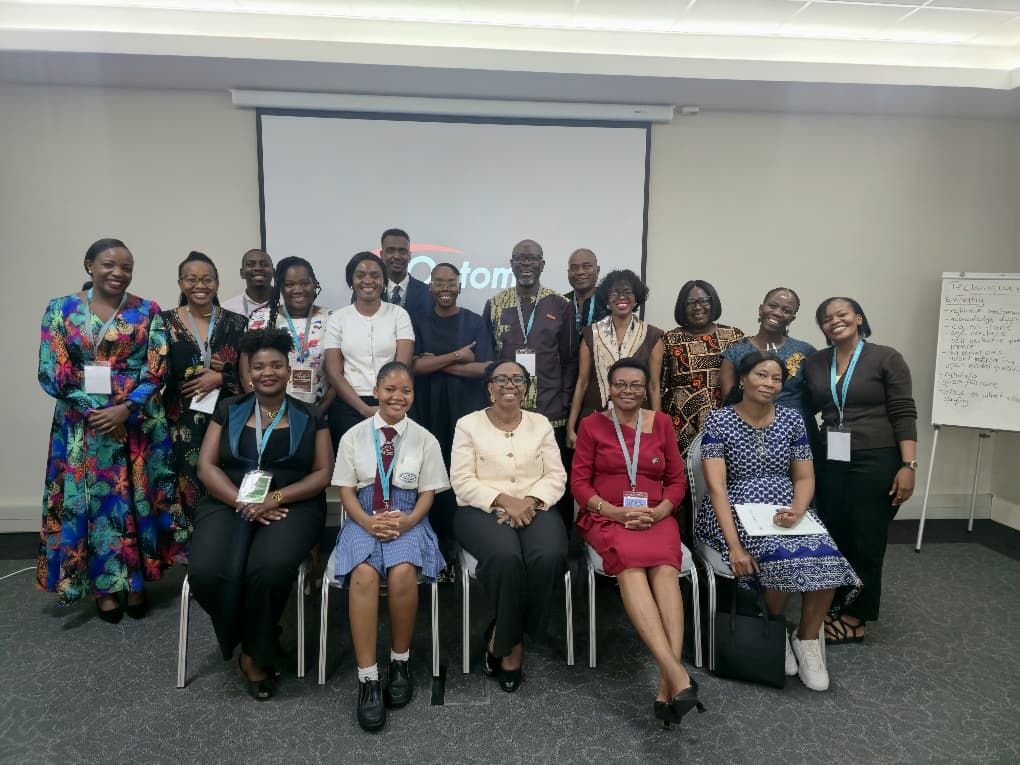
In commemoration of the African Union Day of School Feeding 2026, the Forum for African Women Educationalists, in partnership with the African Union International Centre for Girls and Women’s Education in Africa and World Vision, convened a high-level side event in Gaborone under the theme:
“Integrating Education, Nutrition and WASH to Advance Girls’ Education in Africa.”
The event brought together policymakers, development partners, education practitioners, and civil society actors to examine how integrated approaches across education, health, nutrition, and water, sanitation and hygiene (WASH) can unlock transformative outcomes for girls across the continent.
Discussions underscored that advancing girls’ education in Africa requires moving beyond fragmented interventions toward comprehensive, system-wide solutions. Participants highlighted that access to education alone is not sufficient—learning environments must be safe, inclusive, healthy, and responsive to the diverse needs of learners, particularly girls and those with disabilities.
The side event reinforced the importance of embedding school feeding programmes within broader school health and WASH frameworks to address barriers such as hunger, poor sanitation, and menstrual hygiene challenges—factors that significantly affect attendance, retention, and learning outcomes for girls.
Deliberations culminated in a set of strategic recommendations aimed at strengthening national and continental efforts:
1. Institutionalize Gender-Transformative Education Systems
Member States were urged to go beyond improving access by ensuring dignity, safety, retention, and meaningful participation for all learners. This requires sustained domestic financing, gender-responsive policies, and strong accountability mechanisms that prioritize girls and marginalized groups.
2. Embed Integrated School Health, Nutrition, and WASH in National Frameworks
Participants emphasized the need to institutionalize school feeding, WASH services, menstrual hygiene management, and school health programmes within national education sector plans and budgets. The integration of sex-disaggregated data into Education Management Information Systems (EMIS) was highlighted as essential for evidence-based planning and monitoring.
3. Strengthen Cross-Sector Coordination
The event called for stronger collaboration across key sectors—including Education, Health, Agriculture, Water and Environment, and Social Protection—to ensure efficient, scalable, and cost-effective delivery of school feeding and health interventions.
4. Align National Action with Continental Commitments
Countries were encouraged to accelerate the implementation of continental frameworks such as the Continental Education Strategy for Africa 2026–2035, its Gender Equality Framework, and the Agenda 2063. These frameworks provide a roadmap for advancing gender equality, improving WASH infrastructure, and strengthening human capital development through education.
5. Invest in Sustainable Partnerships and Youth Leadership
Speakers highlighted the importance of strengthening public–private partnerships and leveraging local agricultural systems within school feeding value chains. Equally, the meaningful engagement of young people as co-creators, advocates, and decision-makers was emphasized as critical to achieving sustainable impact.
A key takeaway from the discussions was the urgent need to transition from short-term, fragmented projects to long-term, government-led systems that integrate education, health, and nutrition interventions. Such systems are essential to ensuring that every girl can not only access education but also thrive within it. As Africa continues to advance its education agenda, the outcomes of this side event reaffirm the central role of integrated, gender-responsive approaches in achieving equitable and quality education for all.