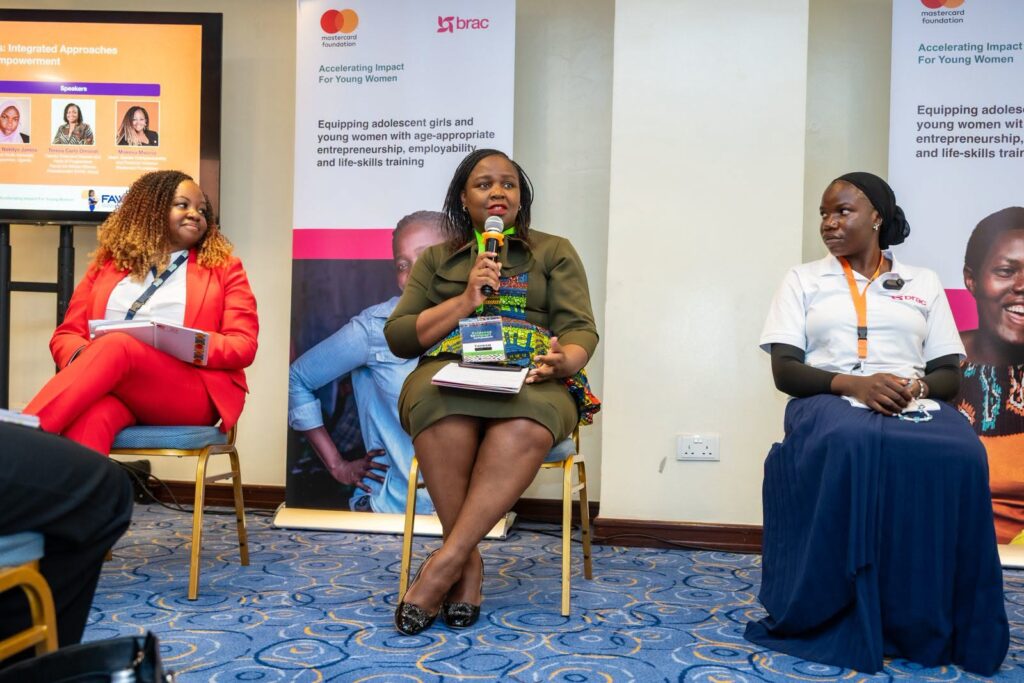
On 9 June, FAWE demonstrated how evidence-based programming can be transformed into scalable impact during a high-level panel discussion focused on strengthening education systems, policies, and practices. The session brought together influential leaders from across the development sector to examine how research, innovation, and partnerships can drive sustainable change for girls and young women across Africa.
Representing FAWE Africa, Ms. Teresa Carlo Omondi-Adeitan, Deputy Executive Director and Head of Programmes, joined an esteemed panel alongside Paroma Afsara Husain, Director of Accelerating Impact for Young Women (AIM) at BRAC International; Makena Mworia, Head of Gender Entrepreneurship and Financial Inclusion at the Mastercard Foundation; and Joweria Nakityo Jamira, Mentor and Youth Advocate from Uganda. Also representing FAWE was Ms. Anastashia Irungu, reaffirming the organization’s strong commitment to collaborative learning and regional advocacy.
During the discussion, Ms. Omondi-Adeitan highlighted FAWE’s innovative approaches implemented through the Imarisha Msichana initiative and the Second Chance Pathways to Access Tertiary Education programme. She shared how these interventions had successfully translated evidence into practical solutions that expanded educational opportunities for marginalized young women and men while influencing institutional practices and strengthening government systems.
Reflecting on the critical role of public institutions, Ms. Omondi-Adeitan emphasized that meaningful policy implementation depended on more than financial investment. She noted that governments achieved greater impact when they allocated qualified personnel, strengthened institutional capacity, provided quality learning environments, and intentionally listened to the voices of young people. Her message reinforced FAWE’s long-standing belief that sustainable change requires both political commitment and people-centred implementation.
The session also created an important platform for young people to share their lived experiences and aspirations. Participants stressed the importance of honest conversations that acknowledged their realities without minimizing their challenges. Their contributions underscored the value of engaging youth as equal partners in designing programmes and policies that directly affect their futures.
The dialogue reaffirmed FAWE’s commitment to placing young people at the heart of its work while safeguarding their dignity, respecting their choices, and amplifying their voices. By showcasing practical, evidence-driven innovations and fostering meaningful partnerships with governments and development actors, FAWE continued to demonstrate that lasting educational transformation is achieved when policies are informed by evidence, shaped through collaboration, and guided by the aspirations of Africa’s young people.