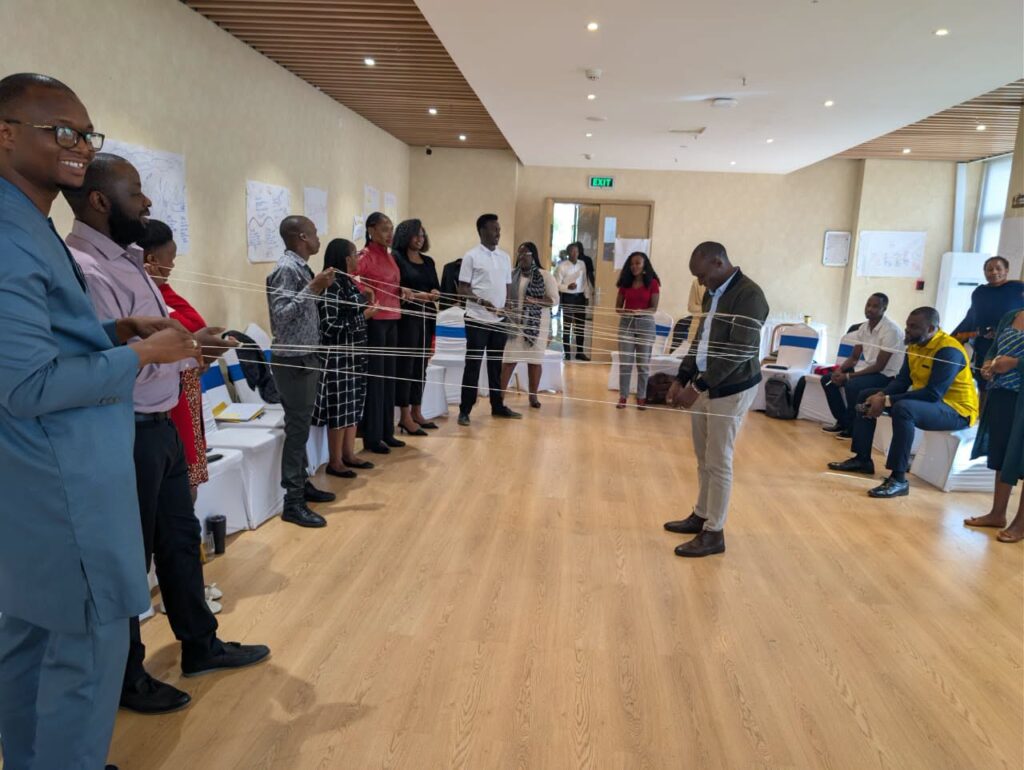
From July 6 to 7, 2025, the Forum for African Women Educationalists (FAWE) Africa Regional Secretariat demonstrated its unwavering commitment to gender equality by completing an intensive two-day Gender Equality and Inclusion Training. The capacity-building initiative brought together staff from across the organization to deepen understanding of core gender concepts and build practical skills essential for advancing gender-transformative approaches throughout the institution’s work. The training represents a strategic investment in ensuring that FAWE’s programming, advocacy, and institutional practices consistently reflect the highest standards of gender responsiveness and inclusion.
The sessions, expertly led by Senior Gender Officer Morapedy Annah Katuki, created a dynamic learning environment where participants explored foundational concepts with clarity and depth. Through interactive sessions and participatory exercises, staff examined the critical distinction between sex and gender, understanding that while sex refers to biological and physiological characteristics that are universal and generally immutable, gender encompasses socially constructed roles and expectations that are learned, culturally specific, and subject to change over time. This foundational understanding enables more nuanced and effective programming that addresses both the symptoms and root causes of gender inequality in education.
FAWE staff also engaged extensively with the continental frameworks that anchor the organization’s mandate. The training explored the Maputo Protocol, the Continental Education Strategy for Africa (CESA), Agenda 2063, and the recently adopted AU Convention on Ending Violence Against Women and Girls (AU-CEVAWG). These instruments provide the policy foundation for FAWE’s advocacy and programming, ensuring alignment with the African Union’s vision for a prosperous, inclusive, and gender-equitable continent. Understanding these frameworks equips staff to engage effectively with governments, partners, and stakeholders at all levels.
The training introduced practical tools essential for program design and monitoring, including the Agency Star, the Masculinities Star, and the Gender-Transformative Marker. These instruments enable FAWE to move beyond gender-sensitive approaches toward genuinely gender-transformative programming that challenges and changes the underlying structures that perpetuate inequality. Participants learned to apply these tools across the project cycle, from design through monitoring and evaluation, ensuring that gender-transformative outcomes are systematically tracked and achieved.
Reflecting on the training’s significance, staff expressed pride in strengthening their capacity to embed gender-transformative approaches in everything FAWE does—from strategies and partnerships to daily operations. This institutional commitment ensures that FAWE remains at the forefront of advancing gender equality in African education, equipped to meet the evolving challenges of the sector while upholding the highest standards of inclusion and equity. The training reaffirms FAWE’s position as a continental leader in gender-responsive education, ready to contribute meaningfully to the African Union’s Decade of Education and Skills Development (2025-2034).