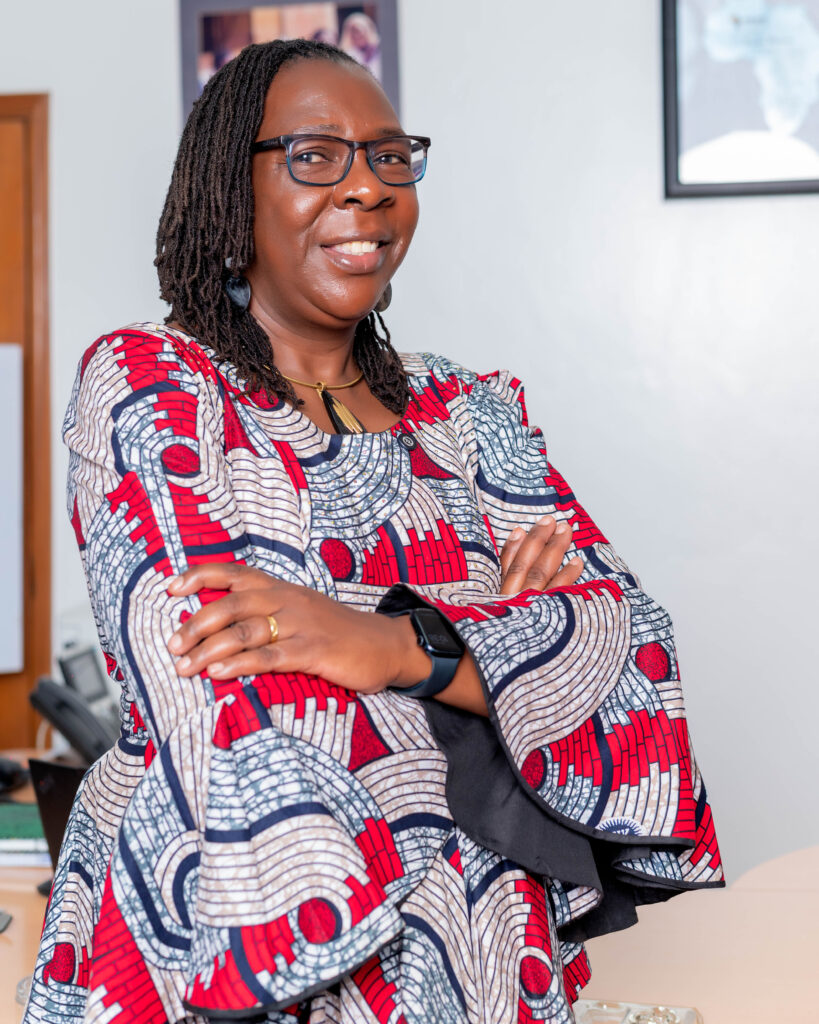
By Dr. Martha Muhwezi, Executive Director FAWE Africa
The start of a new quarter is often framed as a moment of renewal, a time to refine strategies and accelerate delivery. But for Africa, and for the millions of girls whose futures depend on the decisions we make today, this moment demands more than renewal. It demands accountability to our continental ambitions.
Under Agenda 2063, Africa has committed to building “the Africa we want”, a continent driven by its people, especially its women and youth. Education sits at the heart of this vision. And yet, the pace at which we are translating this ambition into reality for girls remains far too slow.
We are not short of commitments. We are not short of evidence.
Across Sub-Saharan Africa, an estimated 98 million girls remain out of school, according to UNESCO. Fewer than 1 in 10 young people access tertiary education, as highlighted by the World Bank, a stark reminder that access without progression continues to define our systems.
These are not new realities. They are persistent ones.
So, the question before us is no longer what is the challenge? It is: why, despite continental frameworks, national policies, and sustained advocacy, does delivery continue to lag behind ambition?
Because the gap we are confronting is not one of knowledge. It is a gap of political will translated into system-wide execution.
Across the continent, we have piloted solutions that work. We have demonstrated models that improve retention, completion, and transition. We have built evidence that shows what is possible when girls are supported holistically, from classrooms to careers.
And yet, too often, these solutions remain confined to programmes rather than embedded into national systems.
This is where the next phase of Africa’s education agenda must shift.
If we are serious about achieving the aspirations of Agenda 2063, then the education of girls cannot continue to be treated as a sectoral issue. It must be recognized, and acted upon, as a continental development priority, central to economic transformation, governance, and social stability.
This requires difficult but necessary shifts:
- From pilot projects to national scale
- From policy commitments to enforceable implementation
- From access-focused metrics to transition and outcome indicators
Because completion without transition is not success, and access without opportunity is not empowerment.
At the same time, Africa is entering a decisive demographic moment. By 2030, the continent will host the largest youth population globally. This is often described as a demographic dividend. But without deliberate, large-scale investment in education and pathways to employment, it risks becoming a structural vulnerability.
Girls and young women sit at the center of this equation, not as beneficiaries of development, but as drivers of Africa’s future. This is why the responsibility before us must be shared and clearly defined.
Governments must move beyond policy adoption to institutionalizing proven models within national education systems. Regional bodies must strengthen accountability mechanisms for the implementation of continental commitments. Development partners must align financing with scalable, system-integrated solutions. And the private sector must engage not only at the point of employment, but across the full education-to-work continuum.
Across Africa, there are institutions and networks already working at the intersection of policy, practice, and community engagement, demonstrating that scalable solutions are not only possible, but already in motion. These efforts reflect a growing recognition that transforming education systems requires both evidence and sustained institutional leadership.
But they also make one reality clear: the constraint is no longer innovation; it is the speed and seriousness of implementation.
As we step into this new quarter, the call is not for renewed commitments, it is for accelerated delivery aligned with our continental ambitions.
Because Africa’s future will not be determined by the frameworks we adopt, but by the systems we transform.
And we cannot claim progress under Agenda 2063 while millions of girls remain excluded from the very opportunities that framework envisions.
This quarter must mark a turning point, not in what we promise, but in what we deliver, at scale and without delay.
For every girl. Everywhere.