By Annah Katuki, Senior Gender Officer, FAWE Regional Secretariat
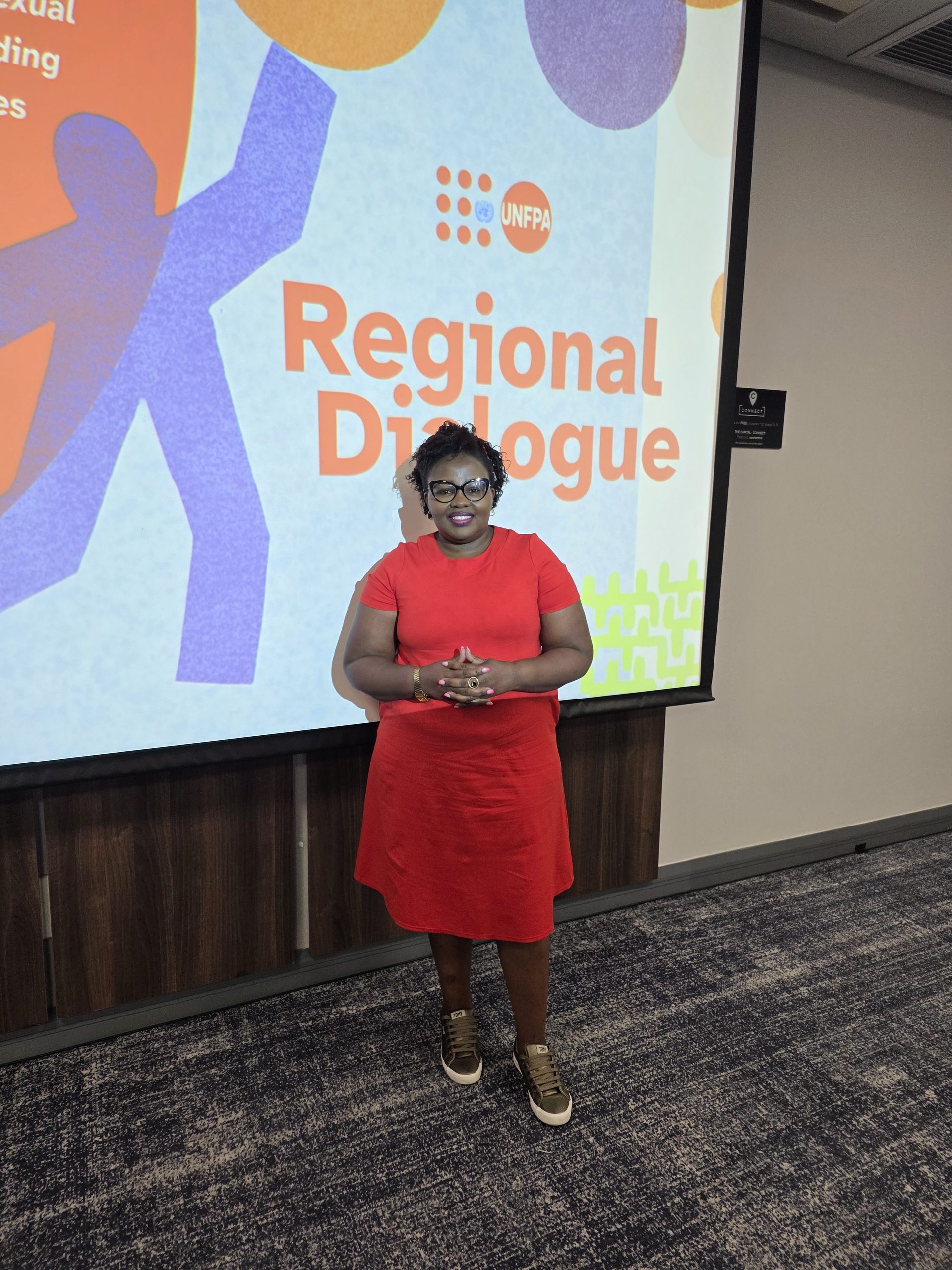
When fifty civil society organisations from across East and Southern Africa sat down together in Johannesburg this week to think about the future of girls, young women and women in the region, the conversation ranged across child marriage, early pregnancy, violence, disability, climate, the law and the money that pays for services, and yet it returned again and again to a single person. She is the adolescent girl who is either in a classroom or has been pushed out of it, and FAWE Africa joined the three-day regional dialogue, convened by UNFPA, to make sure that she stayed at the centre of the discussion. What the dialogue surfaced about the region gives the strongest case FAWE has had in years for investing in her education, and it arrives four weeks before the continent gathers in Nairobi to decide how that investment will be made.
Girls’ education and the demographic outlook for East and Southern Africa
East and Southern Africa is home to more than 700 million people, six in every ten of them under the age of twenty-five, and the region’s population will not stop growing for decades. Whether that growth becomes the demographic dividend that African governments have promised themselves, or a generation of young people without the skills and opportunities to use their numbers, is being decided now in secondary school classrooms, and above all in whether girls are in them. In Mozambique, Malawi and the Democratic Republic of Congo more than four in ten girls are married before they turn eighteen, and across the region early pregnancy remains one of the main reasons an adolescent girl leaves school and never returns. The dialogue looked at the region country by country, and whether a country has large and fast-growing families, is in the middle of its population transition like Kenya, Ethiopia and Rwanda, or is approaching the dividend window like Zambia, Tanzania, Uganda and Malawi, the evidence pointed to the same intervention. A girl who completes her education marries later, has her children later, earns more and makes her own decisions about her life, and every other outcome the region hopes for depends on her finishing school.
She is being asked to do this in a far harder environment than the one in which most of the region’s education and health programmes were designed. Development assistance to the region fell by almost a quarter in 2025, the largest drop on record, and a further fall is expected this year, at the same time as debt repayments have risen from under five percent of government revenue a decade ago to around twelve percent today. Governments are being asked to protect girls’ education, adolescent health and protection from violence while the money for all three shrinks, and the organisations in Johannesburg were frank that the era of waiting for the next project grant is over. The future lies in domestic budgets that are argued for, tracked and defended, and in civil society that can hold governments to the commitments they have already signed.
The pressure on girls is not only financial. The groups opposing gender equality across the region have become more confident and better resourced, and their tools are words rather than programmes, redefining family, culture and sovereignty so that a girl’s right to finish school and to decide her own future can be presented as a foreign idea, and spreading misinformation about adolescents and the guidance they receive on health and relationships. Climate shocks add another layer, because a drought or a flood no longer closes a school alone but pulls girls out of class and into early marriage and domestic work in numbers no budget has planned for, with girls with disabilities, girls in displaced families and girls in rural areas reached first and hardest. And the region’s girls are now growing up online, where harassment, image-based abuse and misinformation reach them faster than accurate information, and where a girl without connectivity misses both the danger and the help.
Proven approaches from FAWE Africa’s work
The encouraging part of the dialogue was how much of what the region needs already exists and has been tested at scale. FAWE has worked across Africa since 1992 on precisely the points where a girl’s schooling breaks down. Gender Responsive Pedagogy trains teachers to see the girl in front of them and to teach in a way that keeps her there, and it is now embedded in teacher training in a growing number of countries. Tuseme, which means let us speak out, gives girls and boys a voice in their own schools on the pressures that push girls out, from early marriage and violence to the household work that keeps them home, and it has produced some of the most articulate young advocates the continent has. Mothers Clubs bring the women of a community into the daily business of keeping girls in school, and FAWE’s work on school-related gender-based violence, on science, technology and vocational pathways for girls, and on second chances for girls who have already left, answers directly what the health, youth and disability organisations in Johannesburg said the region needs. The lesson of the dialogue for FAWE was not that something new has to be invented, but that what works has to be financed, protected and taken to every girl who has not yet been reached, including the girls with disabilities who are too often assumed to need less than their classmates, and the young people who want to be partners in the decisions about their lives rather than beneficiaries of them.
The 4th FAWE International Conference on Girls’ Education in Africa
All of this is the business of the 4th FAWE International Conference on Girls’ Education in Africa, which FAWE Africa hosts in Nairobi on 17 and 18 November 2026 under the theme Investing in Her Future: Accelerating Gender-Transformative Education for African Girls through Sustainable Financing and Innovation. More than three hundred ministers, policymakers, development partners, youth leaders, researchers and private sector actors will spend two days on the questions that Johannesburg has just made more urgent: how gender-transformative education is financed sustainably from domestic budgets and innovative instruments when aid is falling, how girls and young people take their place in the rooms where education budgets and policies are decided, how technology and digital innovation reach the girls furthest from the classroom rather than leaving them further behind, and how partnerships and accountability turn commitments to girls’ education into results that can be measured. The conference will adopt a joint communiqué and call to action for girls’ education in Africa, and FAWE Africa will carry into it the commitments that the Johannesburg dialogue makes to the girls, young women and women of the region.
For governments and partners deciding where scarce money goes in the years ahead, Johannesburg offered a clear answer. There is no investment in the future of this region that returns more than the girl who stays in school, learning and safe, and Nairobi is where that investment is made.
Registration for the 4th FAWE International Conference on Girls’ Education in Africa is open. Contact at girlsconference@fawe.org / +254 714 606 629.