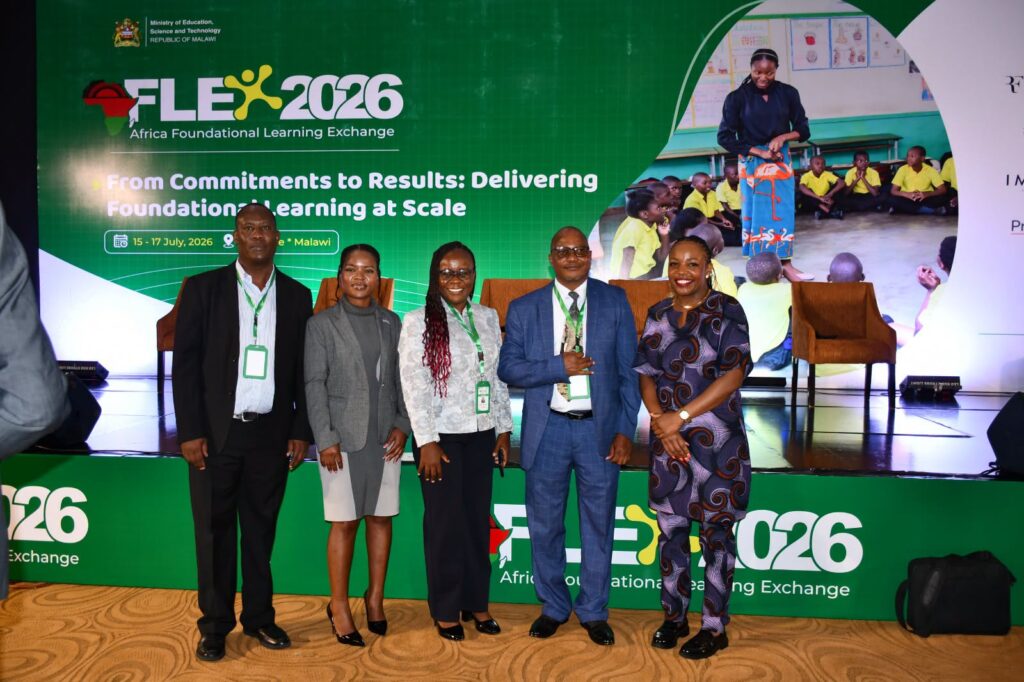
LILONGWE, Malawi – The Africa Foundational Learning Exchange (FLEX) 2026, convened from 15–17 July at the Bingu International Convention Centre, brought together education ministers, policymakers, technical partners, and civil society organizations to tackle foundational learning challenges across the continent. FAWE Africa, represented by a high-level delegation led by Executive Director Dr. Martha Muhwezi, played a central role in shaping the conversations that will define the continent’s education agenda for the years ahead .
Dr. Muhwezi’s address to the plenary underscored Gender-Responsive Pedagogy (GRP) as an essential pillar of quality foundational learning. “Despite the progress made across the continent, girls continue to face disproportionate barriers that limit their access to, participation in, and completion of education,” she stated. Her presentation emphasized that policy commitments must be matched with concrete action, calling on governments, development partners, and stakeholders to translate dialogue into measurable interventions that create lasting impact for learners in classrooms and communities .
The FAWE delegation—which included Catherine Asego, Senior Advocacy and Partnerships Officer, and Douglas Masika, Senior Partnerships and Institutional Strengthening Officer—engaged in high-level strategic discussions with education ministers and development partners. Their participation reflected FAWE’s commitment to ensuring that gender equality remains at the heart of foundational learning strategies across the continent. The delegation also leveraged the platform to share evidence-based approaches and best practices from FAWE’s extensive work across Africa, including the successful implementation of GRP training programmes .
FAWE was joined at FLEX 2026 by the Forum for African Women Educationalists in Malawi (FAWEMA), whose participation highlighted the collective commitment of the FAWE network to strengthening foundational learning and advancing gender equality. Wesley Chabwera, FAWEMA’s Executive Director, joined the FAWE Africa delegation in engaging with delegates and sharing insights from the Chapter’s work in Malawi. The presence of both organizations demonstrated the strength of the FAWE network in driving systemic change through coordinated action and national ownership .
As FLEX 2026 concluded, the consensus among delegates was clear: foundational learning cannot be achieved without intentional, gender-responsive approaches that address the unique barriers facing girls. Dr. Muhwezi’s message resonated throughout the conference halls—that dialogue must become action, and that every child, regardless of gender, deserves access to quality education that unlocks their full potential. FAWE Africa remains steadfast in its commitment to ensuring that this vision becomes a reality across the continent .