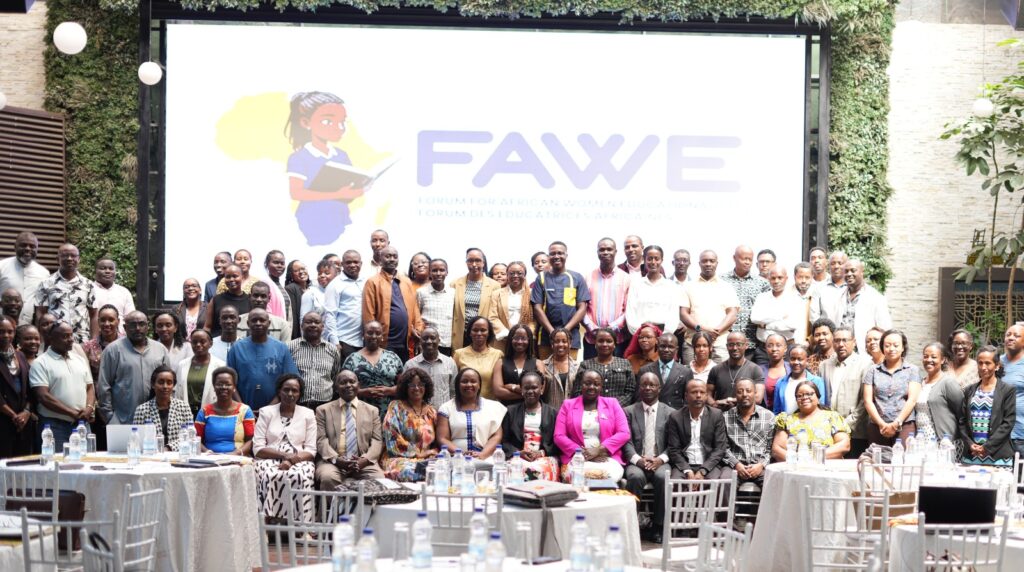
ADDIS ABABA, Ethiopia – On 11 and 12 May, FAWE convened the End-Term Evaluation (ETE) Validation Meeting for the FAWE/Mastercard Foundation Phase I Program in Addis Ababa, Ethiopia. The two-day gathering brought together key stakeholders from Uganda, Rwanda, and Ethiopia to reflect on ten years of impact, learning, and transformation under the FAWE/Mastercard Foundation Scholars Program and the Higher Education Access Program (HEAP).
Implemented over the past decade, the two programs have supported young women and men from underserved communities to access secondary and higher education, while equipping them with the skills, confidence, and opportunities needed to thrive beyond the classroom. The validation meeting assembled program alumni, representatives from Ministries of Education in Ethiopia, Rwanda, and Uganda, partner universities, TVET institutions, partner high schools, implementing FAWE chapters (FAWE Rwanda, FAWE Uganda, and FAWE Ethiopia), and the FAWE Regional Secretariat for collective reflection and dialogue on the program’s journey and outcomes.
During the opening session of Day 1, FAWE Deputy Executive Director Ms. Teresa Omondi-Adeitan reflected on the importance of learning and continuous improvement, sharing a defining moment from her early days with the organization: “My first FAWE Africa graduation ceremony was a defining moment. During the ceremony, a scholar shared her extraordinary journey of crossing the Nyungwe Forest in Rwanda to collect her award letter. While she described it as a triumph, I knew FAWE could do better. We listened, we learnt, and we changed the process. This evaluation gives us another opportunity to transform practice and deliver even stronger, more responsive programming.”
One of the most powerful highlights of the first day was the active participation of alumni, whose voices, experiences, and reflections reaffirmed the importance of co-creation and meaningful participant engagement in program implementation and learning. As one participant noted, “Ten years later, the stories of transformation continue to speak for themselves.”
Day 2 provided an important platform to validate findings, reflect on lessons learned, and develop country-specific action plans to strengthen future programming and scale impactful interventions. A key highlight of the engagement was the screening of a documentary showcasing stories of transformation, resilience, and impact from program participants across the three countries. The documentary brought to life the human stories behind the program’s achievements and reinforced the power of education in transforming lives and communities.
Ms. Omondi-Adeitan concluded the workshop with a powerful reminder: “Evaluation is not an endpoint. It is a bridge to better implementation, stronger accountability, and more meaningful impact for the young women and men we serve across Africa.” One of the most moving moments of the workshop came from hearing directly from alumni, whose testimonies reminded all present that behind every statistic is a transformed life, expanded opportunity, and renewed hope for the future.
The validation meeting reaffirmed FAWE’s commitment to evidence-based programming, continuous learning, and the co-creation of solutions with the very communities the organization serves.