FAWE at the 70th Session of the Commission on the Status of Women (CSW70)
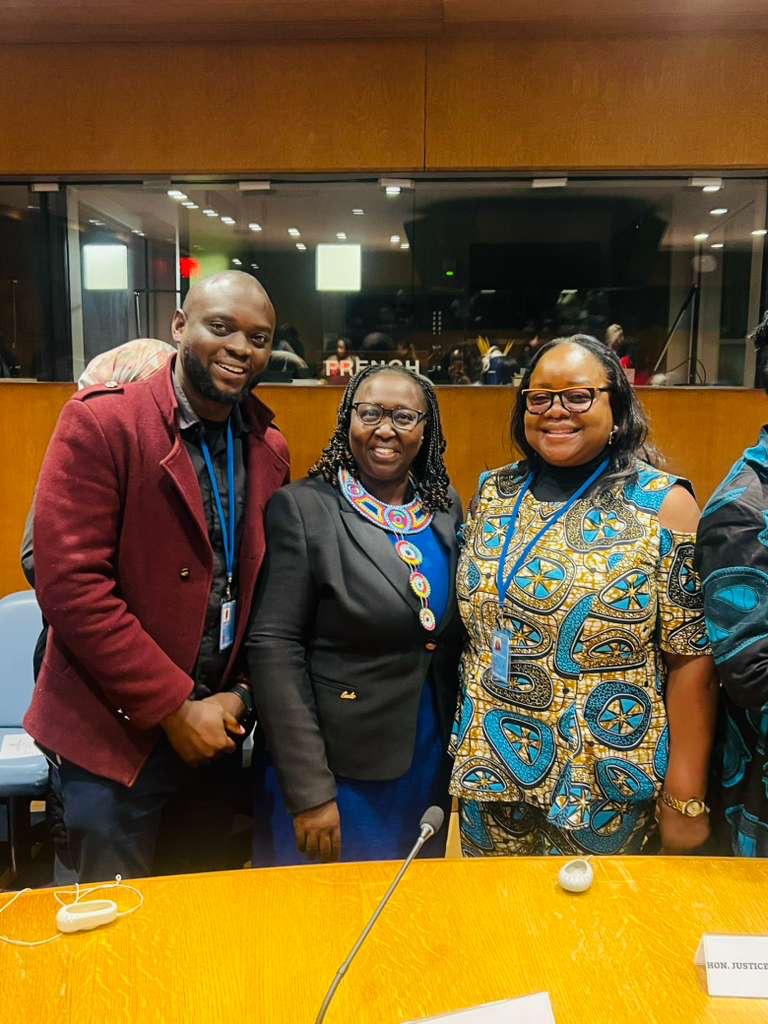
At the 70th Session of the Commission on the Status of Women (CSW70) in New York, the Forum for African Women Educationalists (FAWE) took its place among global leaders, partners, and advocates, driving forward a bold and unified agenda: advancing girls’ education as the foundation for women’s leadership, justice, and inclusive development across Africa.
FAWE’s participation spanned a series of high-level engagements, each reinforcing the interconnected nature of education, governance, policy, and protection in shaping the future of women and girls.
At a high-level session hosted at the Permanent Mission of Canada to the United Nations, FAWE joined women parliamentarians and global partners under the theme “Power to Lead, Power to Justice: Women Parliamentarians Transforming Governance.” The dialogue underscored the transformative impact of women in leadership—highlighting how their participation goes beyond representation to fundamentally reshape governance systems. Women leaders are driving more inclusive, responsive, and accountable policies that reflect the lived realities of communities. FAWE used this platform to emphasize that such leadership begins with education. By equipping girls with knowledge, confidence, and critical thinking skills, education lays the groundwork for meaningful participation in civic and political life. Investing in girls’ education, therefore, is not only a social imperative but a governance strategy.
Building on this, FAWE co-hosted a high-level side event alongside the African Union International Centre for Girls and Women’s Education in Africa (AU CIEFFA) and UN Women, focusing on advancing inclusive legislative systems for girls’ education. This engagement brought together policymakers and development partners to examine how policy reform can accelerate progress. A central message emerged: access to education alone is not enough. Strong, gender-responsive, and enforceable policies are essential to ensure that girls are retained in school, complete their education, and transition into opportunities that empower them economically and socially. FAWE drew from its extensive experience across the continent to highlight its role in supporting governments to design and implement such policies. A compelling call to action was delivered, urging stakeholders to treat education in Africa with urgency—strengthening financing, accountability, and political commitment to meet the needs of a rapidly growing youth population.
FAWE’s advocacy also extended to addressing deeply rooted social challenges. In partnership with the End FGM/C Africa Network, the National Gender and Equality Commission of Kenya, and the Coalition on Violence Against Women, FAWE participated in a high-level dialogue focused on ending female genital mutilation/cutting (FGM/C). This engagement brought to the forefront the urgent need to move from dialogue to coordinated action. FAWE highlighted the critical role of education systems in prevention—schools serve as safe spaces where girls can access information, build confidence, and seek support. However, the conversation made clear that education alone cannot dismantle harmful social norms. Ending FGM/C requires a holistic, multi-sectoral approach that integrates education, legal protection, community engagement, and access to justice. Participants called for stronger collaboration across sectors to ensure that interventions are comprehensive, sustainable, and rooted in community ownership.
Further strengthening its engagement on justice and protection, FAWE contributed to discussions on expanding access to justice for women and girls through innovative models. During a high-level session on Kenya’s Multi-Door Justice Model, FAWE joined partners in exploring how justice systems can be reimagined to be more inclusive and accessible. The model—integrating formal courts with alternative dispute resolution mechanisms—demonstrates how barriers to justice can be reduced, particularly for women and girls who often face financial, social, and systemic obstacles. Discussions emphasized the need for specialized courts, community-based solutions, and multi-stakeholder collaboration to ensure timely and equitable justice.
In parallel, FAWE engaged in continental discussions led by the African Union, focusing on strengthening accountability frameworks to protect girls from cross-border trafficking, exploitation, and rights violations. This engagement highlighted the vulnerabilities faced by girls in fragile and high-risk contexts and reinforced the need for coordinated, cross-border responses to safeguard their rights. It also underscored the importance of linking education, protection systems, and policy frameworks to build resilience and ensure long-term safety for girls.
Beyond formal sessions, CSW70 provided a critical platform for partnership-building and strategic engagement. FAWE held discussions with key stakeholders, including government representatives, continental leaders, and development partners, to explore opportunities for collaboration in advancing girls’ education and protection. These engagements not only strengthened existing partnerships but also opened new pathways for joint action, including support for upcoming initiatives such as the FAWE Girls Conference.
Across all these engagements, a unifying message emerged: the challenges facing girls and women are interconnected—and so too must be the solutions. Education, policy reform, leadership, justice, and community transformation must work together to create lasting change.
FAWE’s presence at CSW70 was therefore not just about participation—it was about influence, advocacy, and action. It reaffirmed FAWE’s role as a leading voice in advancing gender-transformative education and shaping the systems that support girls and women across Africa.
As the global community looks toward the future, FAWE remains steadfast in its commitment: to ensure that every girl has access not only to quality education, but also to leadership opportunities, protection from harm, and a voice in shaping her own future. Because when girls are educated and empowered, they do not just change their own lives—they transform communities, strengthen institutions, and drive the continent forward.