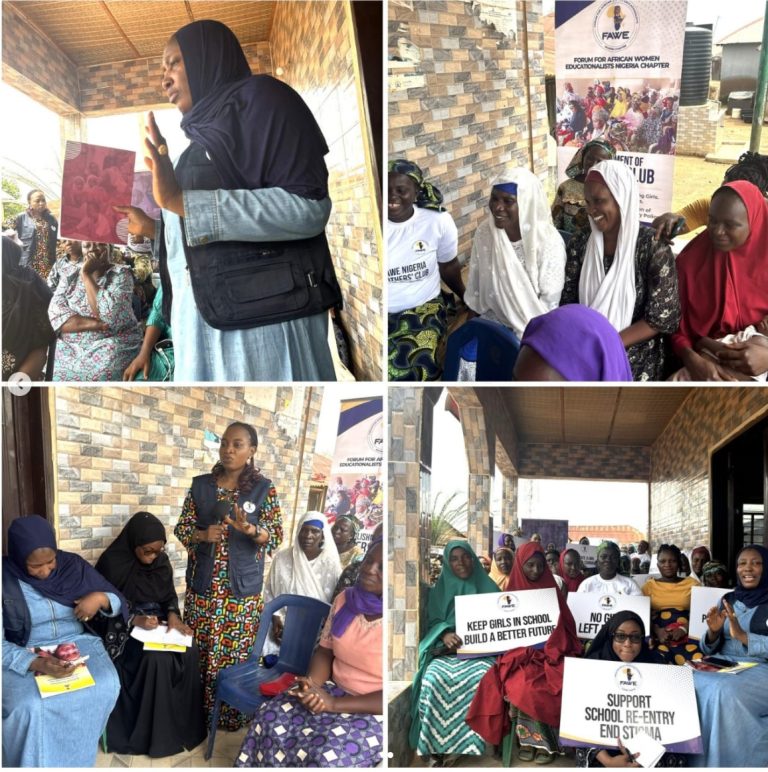
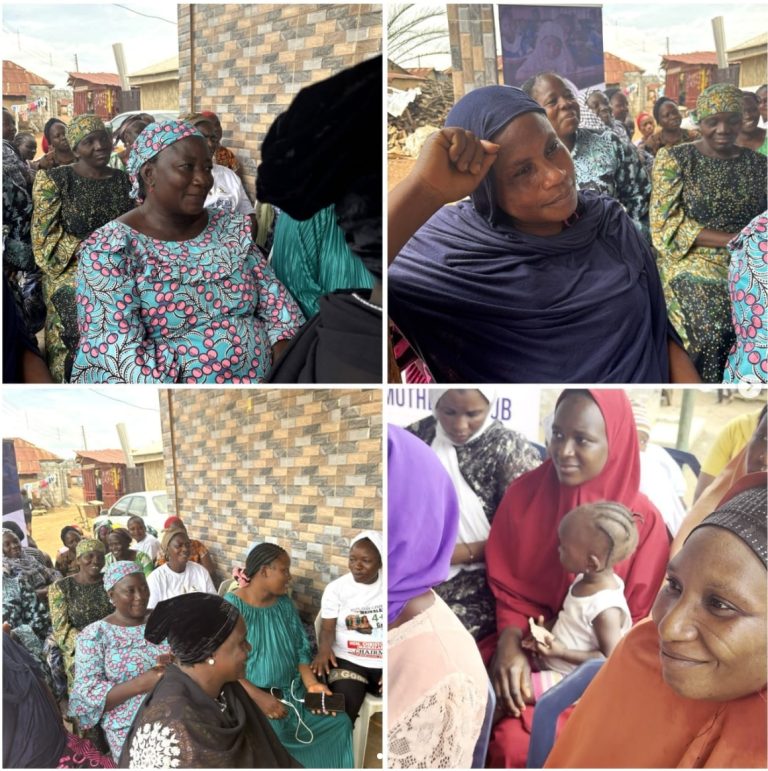
On 12 September 2026, a powerful movement for community-led change took root in Durumi 3, Abuja. Following the successful training of women leaders on the Mothers’ Club model, FAWE Nigeria took the next step into the community with the official inauguration of the Mothers’ Club. It was a moment that marked the transition from preparation to action, from training to transformation, and from individual empowerment to collective impact.
The trained women leaders led a meaningful conversation with mothers in their community, sharing the importance of supporting girls to stay in school, return to school when needed, and thrive. The engagement represented the culmination of their training and the beginning of their work as advocates and champions for girls’ education within their own community.
The conversation was not a one-way transmission of information but a genuine dialogue. It provided an opportunity for mothers to share their experiences, discuss the challenges girls faced, and commit to working together to support girls’ education and wellbeing. The mothers brought their own perspectives, their own stories and their own insights, enriching the discussion and ensuring that the solutions proposed were grounded in the realities of the community.
The National Coordinator of FAWE Nigeria, Amina Usman, encouraged the women to take ownership of the Mothers’ Club and become strong voices for girls, families and positive change in their community. Her words resonated deeply with the participants, reinforcing the message that the Mothers’ Club was not an external imposition but a community-owned initiative that would derive its strength from the commitment and participation of its members.
The inauguration represented far more than a ceremonial event. It was a declaration that the community was taking responsibility for the education and wellbeing of its girls. It was a statement that mothers, when empowered with knowledge and supported by a network of peers, could be powerful agents of change. And it was a promise that the girls of Durumi 3 would have champions who would fight for their right to learn, grow and thrive.
The Mothers’ Club model recognised that sustainable change could not be imposed from outside; it had to be nurtured from within. By investing in the training of women leaders and supporting them to establish clubs within their communities, FAWE Nigeria was building a foundation for lasting impact. The clubs would serve as hubs for information-sharing, peer support and collective action, ensuring that the message of girls’ education was continuously reinforced and acted upon.
As the inauguration concluded, the women of Durumi 3 emerged with a renewed sense of purpose and a clear understanding of their role. They had committed to supporting girls to stay in school, to return to school when circumstances had interrupted their education, and to thrive in all aspects of their lives. They had committed to working together, to sharing their experiences and to holding each other accountable. And they had committed to being voices for change in their community.
This was just the beginning. From trained women leaders to empowered communities, the Mothers’ Clubs were taking action. The ripple effects of this initiative would be felt not only in the lives of individual girls but in the fabric of the community itself. When girls were educated, when they were supported to complete their education and pursue their aspirations, the benefits extended far beyond the individual. Families were strengthened, communities were enriched and nations were built.