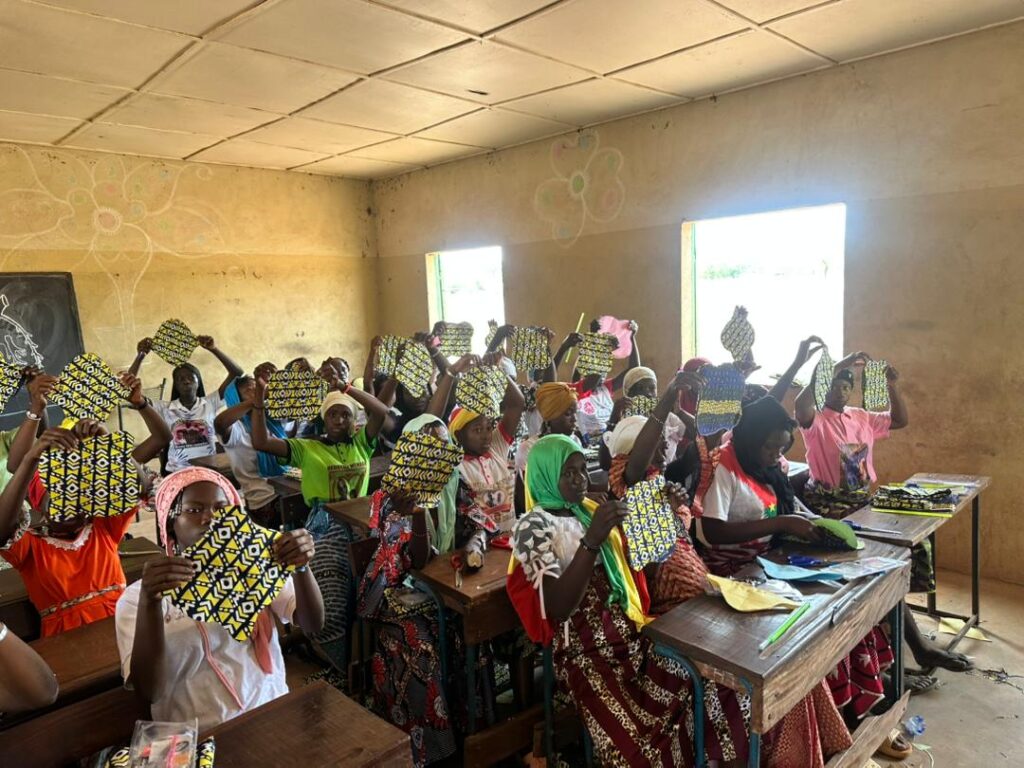
SIKASSO, Mali – On 7 May, as part of the implementation of the project *Appui pour un Environnement Scolaire, Protecteur et Inclusif pour les droits de l’Enfant et le Développement Durable* (PAES-PIDE), a reusable hygienic cotton pad production activity was organized in the Cercle of Niéna, Sikasso Region. The initiative brought together girls from partner schools within the project, who benefited from hands-on training in the manufacture of reusable sanitary pads using locally sourced materials.
During the workshop, participants received comprehensive instruction on cutting and assembling absorbent cotton fabric, sewing and finishing techniques, as well as best hygiene and maintenance practices to ensure durable and safe use of the products. The practical sessions were designed not only to equip the girls with a valuable life skill but also to provide them with a sustainable, cost-effective solution to a challenge that has historically contributed to school absenteeism across the region.
Beyond the technical training, dedicated awareness sessions allowed facilitators and participants to engage in open discussions on menstrual health management, girls’ rights, and the critical importance of remaining in school even during menstruation. These conversations helped to break the silence and stigma that often surrounds menstruation in many communities, while reinforcing the message that periods do not have to be a barrier to education.
The initiative pursued several key objectives: improving girls’ access to appropriate and affordable hygienic protection; strengthening their autonomy and self-confidence; reducing school absenteeism linked to menstruation; and promoting sustainable, eco-friendly solutions that reduce waste and dependence on disposable products. By combining practical skill-building with rights-based awareness, the workshop addressed both the material and psychological dimensions of menstrual health.
FAWE Mali’s intervention under the PAES-PIDE project demonstrated once again that locally rooted, girl-centered approaches can yield immediate and lasting benefits for school retention and gender equality. The reusable sanitary pads produced by the participants will enable them to attend school regularly and with dignity, while the knowledge and confidence gained will serve them well beyond the classroom. The workshop also positioned the girls as potential peer educators who can share their skills and knowledge with other young women in their communities, multiplying the impact of the initiative.