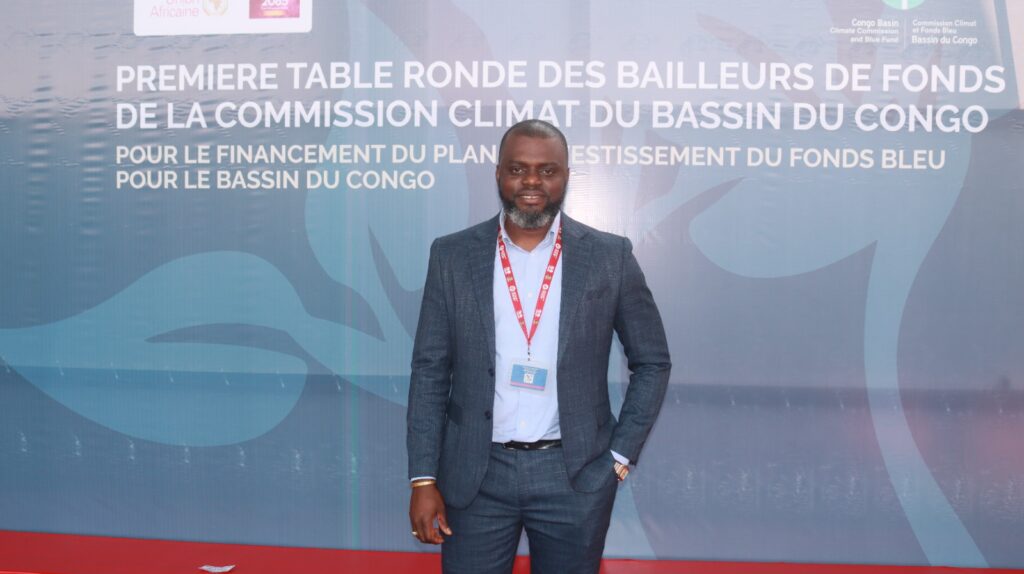
BRAZZAVILLE, Republic of Congo – From 25 to 29 May 2026, FAWE participated in the African Development Bank Group Annual Meetings, held in Brazzaville under the theme “Mobilising Africa’s Development Financing at Scale in a Fragmented World.” Represented by Mr. Kossi Tsenou, Senior Communication Officer, FAWE engaged in this premier continental platform to contribute to high-level conversations on development financing, strategic partnerships, inclusive growth, and human capital development.
The Annual Meetings convened African leaders, policymakers, investors, development partners, central bank governors, and civil society actors from across the continent to reflect on Africa’s pressing financing needs and emerging opportunities in a complex global environment. As discussions unfolded around how to mobilize resources at scale for Africa’s development priorities, FAWE consistently emphasized that education—and in particular girls’ education—must remain central to the continent’s financing agenda. Drawing on the organization’s three decades of experience in advancing gender-transformative education across Africa, FAWE articulated a clear and compelling message: investing in girls and young women is not merely a social priority; it is a strategic investment in skills development, employment, leadership, innovation, and long-term economic transformation.
Throughout the week, Mr. Tsenou engaged in panel discussions, side events, and bilateral meetings with key stakeholders, including representatives from African Union institutions, multilateral development banks, government delegations, and civil society networks. He shared FAWE’s evidence-based insights on the financing gaps that continue to hinder girls’ access to quality education, particularly at the secondary and tertiary levels, as well as in technical and vocational education and training (TVET). He also highlighted successful financing models under the FAWE/Mastercard Foundation Phase II Programme and other partnerships, demonstrating how targeted investments in gender-responsive education yield measurable returns in terms of economic growth, social cohesion, and intergenerational well-being.
FAWE’s participation reinforced the organization’s unwavering commitment to ensuring that education and gender equality remain visible and prioritized within Africa’s broader development financing architecture. In a world marked by fiscal constraints, competing priorities, and global uncertainties, FAWE argued that deliberate, sustained, and scaled-up financing for girls’ education is not an expense but a prerequisite for achieving the continent’s aspirations under Agenda 2063 and the Sustainable Development Goals. The Annual Meetings concluded with renewed calls for innovative financing mechanisms, stronger public-private partnerships, and greater accountability to the most marginalized learners—calls that FAWE will continue to champion across all its advocacy platforms.