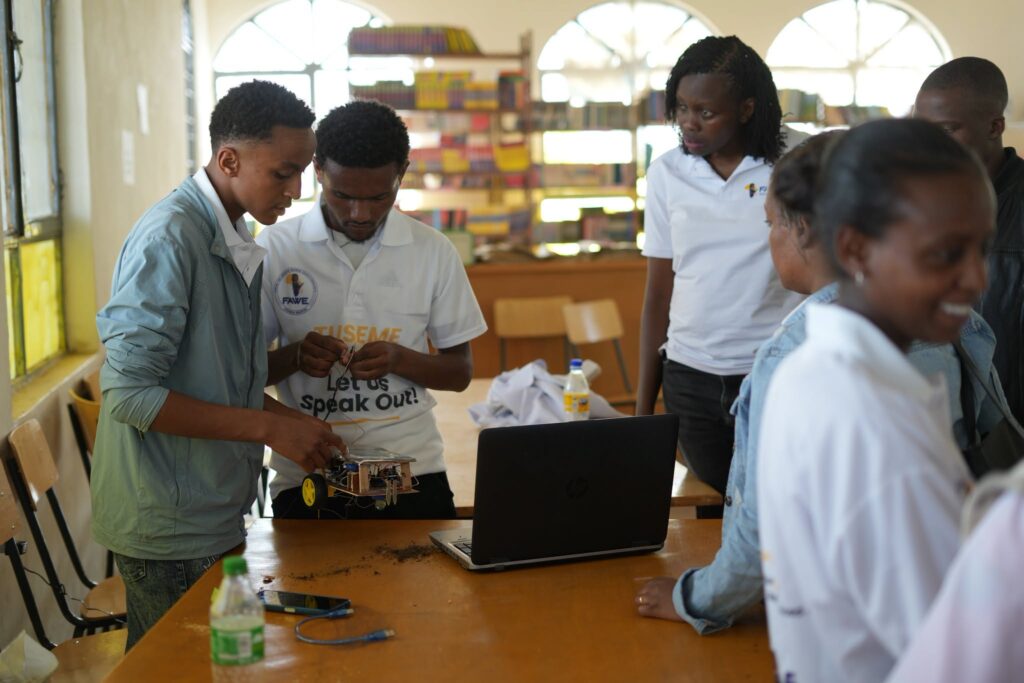
In a powerful demonstration of its commitment to translating research into action, FAWE Ethiopia orchestrated a week of high-impact engagements from July 2, 2026, bringing together a constellation of education stakeholders to strengthen the Tuseme model’s transformative potential. The initiative, supported by the GPE KIX Tuseme Project, convened representatives from the Ethiopian Ministry of Education, teachers, school leaders, parents, religious leaders, and Tuseme club members to advance gender equality, learner leadership, and peaceful coexistence in schools across the country.
Central to the week’s activities were knowledge exchange sessions that highlighted how Tuseme clubs are empowering learners, including those from internally displaced communities, to speak out on challenges affecting their education and develop learner-led solutions. The participatory model, which uses theatre and the arts to create safe spaces for dialogue, has proven particularly effective in building confidence and agency among marginalised learners. Participants shared inspiring stories of how the approach has enabled students to address issues ranging from gender-based violence to school-related barriers, demonstrating the model’s relevance across diverse contexts.
FAWE Ethiopia also convened a Servant Leadership and Conflict Resolution Training designed to build the capacity of education stakeholders to support the adaptation and scaling of the Tuseme model in IDP and refugee communities. The training equipped participants with practical skills for fostering inclusive learning environments and strengthening community engagement. Significantly, the initiative has laid groundwork for extending these capacity-building efforts to Sherkole Refugee Camp, ensuring that displaced learners benefit from the model’s empowering approach. At the policy level, FAWE participated in the Uptake Forum on Institutional Support for Promoting the Use of Research Evidence in Policy and Planning, organised in Addis Ababa. During a panel discussion moderated by Ms. Tricia Wind of IDRC, FAWE Ethiopia Programme Coordinator Mr. Blen Berhane presented key recommendations emerging from the project, including institutionalising Tuseme clubs nationally and strengthening advocacy to drive social and behaviour change for gender parity in education. His presentation underscored the importance of evidence-based policymaking in creating sustainable educational transformation.