At the 3rd Africa Skills Week 2026 in Harare, Zimbabwe, one first-year student discovered that the biggest ideas often start small — and that the world is waiting for his.
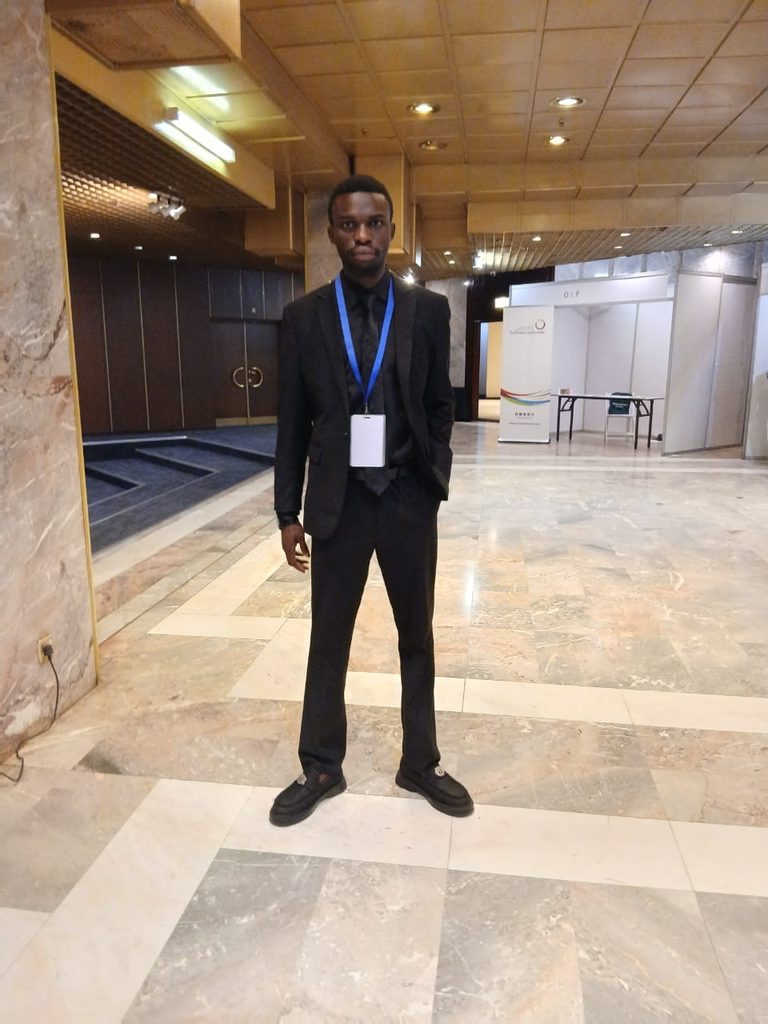
Most first-year university students are still finding their footing.
Tshamala Paul is already building houses — from discarded plastic bottles.
A civil engineering student at Harare Polytechnic and a participant of the FAWEZI program under the FAWE/Mastercard Foundation Phase 2 Program in Zimbabwe, Tshamala is not your average first-year student. He is a young man on a mission: to turn waste into infrastructure, ideas into impact, and struggle into solutions.
And at the 3rd Africa Skills Week 2026 in Harare, Zimbabwe, his mission found its momentum.
The 3rd Africa Skills Week is a continental convening of policymakers, educators, entrepreneurs, and young people — all dedicated to one shared goal: building a skilled, empowered, and competitive Africa.
For Tshamala, the experience was nothing short of revelatory.
“My experience at the 3rd Africa Skills Week 2026 was inspiring and eye-opening,” he says. “I had the chance to interact with many organizations from around the world, including NGOs, government institutions, and groups that work with marginalized young people.”
Those conversations did more than expand his network. They expanded his understanding of what is possible.
“These conversations showed me how different stakeholders approach skills development, youth employment, and inclusion. I heard practical examples of programs that open doors for young people who are often left behind — those from rural areas, those with disabilities, those who are out of school.”
Seeing so many people committed to the same goal was deeply motivating. “It reminded me,” Tshamala says, “that my work is part of a bigger movement across Africa and beyond.”
But Tshamala didn’t just attend Africa Skills Week 2026. He absorbed it.
He learned about life skills programs — how they help young people build confidence, communication, problem-solving, and decision-making abilities. He learned about course-related programs and campaigns in civil engineering, and how technical and vocational training is being promoted to attract young people into the field.
He also connected with people from different business sectors — entrepreneurs, innovators, and professionals who shared their stories of starting small, facing challenges, and pressing forward.
“Hearing how they run their ventures, identify opportunities, and overcome challenges helped me look at my own business from new angles and think more strategically about growth,” he says.
And on a personal level, the event boosted his confidence and sharpened his networking and communication skills.
Perhaps the most remarkable thing about Tshamala is not what he learned at Africa Skills Week 2026.
It is what he is already doing.
Under the FAWEZI Mastercard Foundation Programme 2, Tshamala is developing a low-cost construction project that uses empty plastic bottles as building materials. The project serves a dual purpose: it provides affordable construction solutions for communities in need, and it addresses environmental waste management by repurposing plastic waste that would otherwise pollute the environment.
“I have managed to come up with a low-cost construction which includes the use of empty plastic bottles as construction materials,” he says. “This helps as an environmental waste management action.”
It is a simple idea. But simple ideas, when executed well, can change the world.
And for Tshamala, the plastic bottle project is just the beginning.
Six Insights That Will Shape a Generation
Throughout his time at Africa Skills Week 2026, Tshamala distilled several key insights that will guide his work and future initiatives:
1. Ideas must be turned into real life. “An idea only creates change when people can see and use it,” he says. Find a real need. Plan it. Start small. Test it. Collect feedback. Grow it.
2. Practical ideas can solve real community challenges. “The best solutions come from listening to the community and involving the people affected.”
3. Partnership and interaction between organizations are necessary. “No single organization can solve big challenges alone. When NGOs, government bodies, businesses, and communities share resources, skills, and networks, they reach more people and the impact lasts longer.”
4. Skills and mentorship change lives. “Practical skills, combined with guidance and access to opportunities, give young people the confidence and tools to build their own future.”
5. Communication and visibility matter. “To gain support for an idea, you must be able to explain it clearly, show its value, and share its results.”
6. Sustainability is important. “A good initiative must be planned so that it can continue over time, through local ownership, simple budgeting, and ongoing partnerships.”
Tshamala is not content to simply absorb knowledge. He is determined to apply it.
He plans to start and promote his own initiatives, beginning small and using community meetings, social media, and word of mouth to build momentum. He will identify specific problems affecting young people around him and design simple, practical projects to address them. He will follow up with the organizations and people he met at Africa Skills Week 2026, building partnerships with NGOs, government institutions, and businesses.
He will share what he learned with his colleagues, his community, and other young people. He will support marginalized young people by connecting them with training, mentorship, and job or business opportunities. And he will apply the business ideas he gained, keep learning, measure his progress, and improve over time.
“I will track results, listen to feedback, and adjust my projects so they stay relevant and effective,” he says.
One of the most powerful insights Tshamala took from Africa Skills Week 2026 is the importance of intentional inclusion.
“I learned that young people from rural areas, those with disabilities, and those who are out of school face barriers such as lack of access to training, limited funding, low confidence, and few networks,” he explains. “I also learned that inclusion has to be intentional — programs should be designed with these young people, not just for them.”
This understanding shapes his vision for the future. He wants to create opportunities for those who are most often left behind. He wants to build systems and projects that are accessible, inclusive, and sustainable.
And he wants to do it alongside others — not alone.
For Tshamala, Africa Skills Week 2026 also expanded his sense of what is possible across the continent.
“Learning about opportunities in fields like civil engineering, technical trades, and different business sectors opened my eyes to paths I had not considered,” he says. “I now see Africa as a continent full of possibilities, where skills can lead to employment, self-employment, and cross-border cooperation.”
That perspective is powerful. It turns Africa from a place of challenges into a place of opportunities. From a continent to be helped into a continent to be built.
And Tshamala is ready to build.
The Takeaway: Real Change Comes From Action
Tshamala Paul’s story is a reminder that age is not a barrier to impact. First-year students can build houses from plastic bottles. Young people from marginalized backgrounds can become innovators, entrepreneurs, and leaders. Ideas that start small can grow into movements that change communities.
“Africa Skills Week showed me that real change comes from turning ideas into action and working together,” Tshamala says. “I am committed to applying these lessons to create a positive impact in my community and beyond.”
He came to Harare as a student. He left as a builder.
And the future he is constructing — one plastic bottle, one partnership, one idea at a time — is a future worth believing in.
Tshamala Paul is a first-year civil engineering student at Harare Polytechnic and a participant of the FAWEZI program under the FAWE/Mastercard Foundation Phase 2 Program in Zimbabwe. He is passionate about sustainable construction, community development, and youth empowerment.
This article is part of our series spotlighting young African changemakers participating in the 3rd Africa Skills Week 2026. Follow us for more stories of skills, innovation, and transformation across the continent.