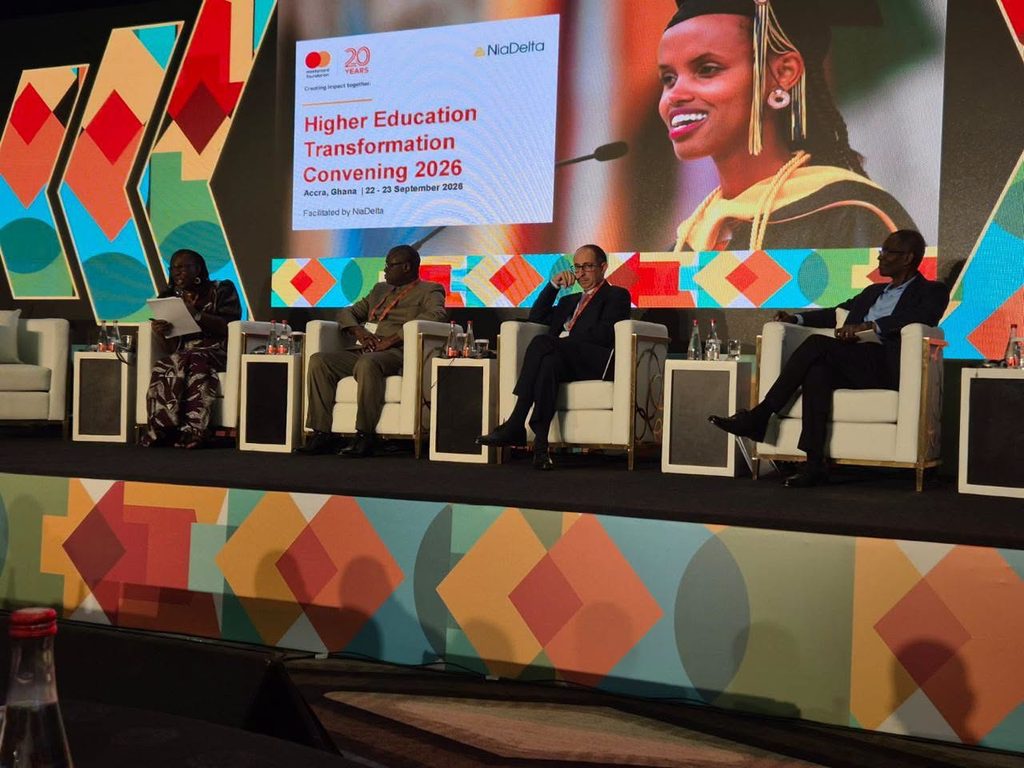
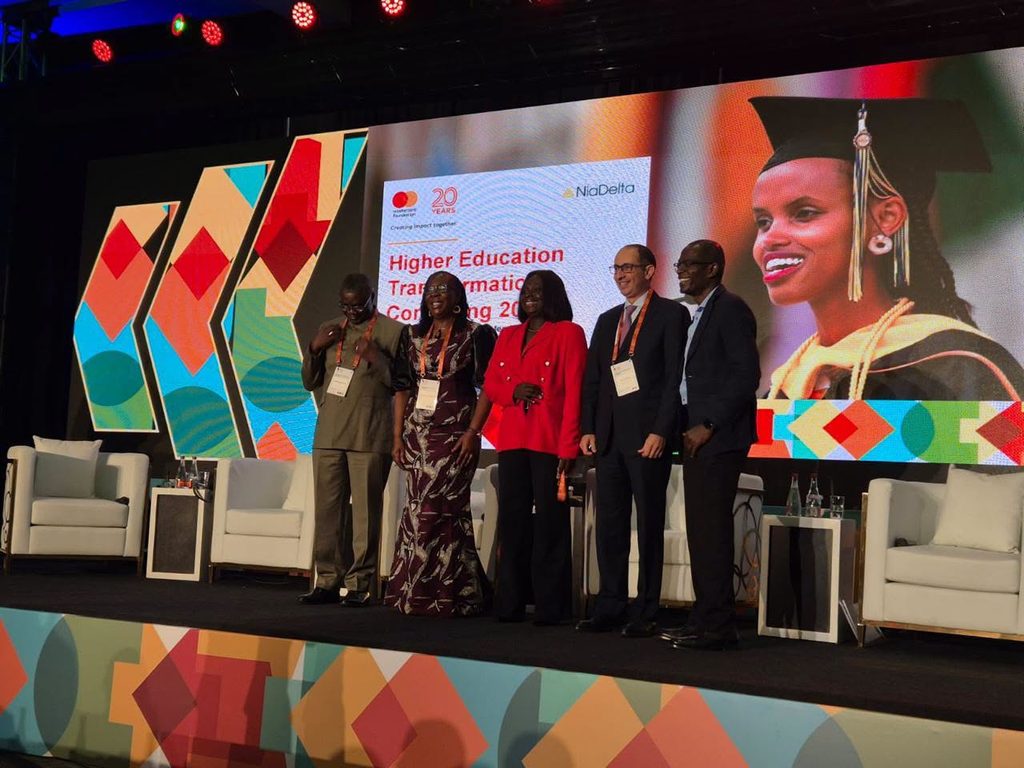
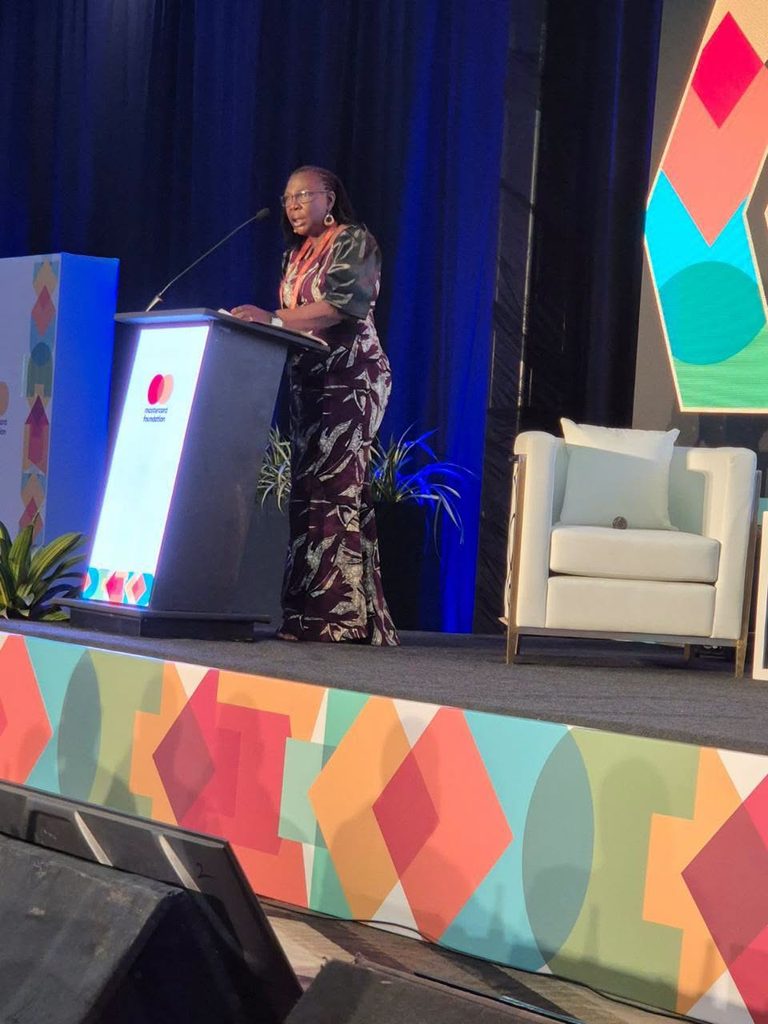
The 2026 Higher Education Transformation Convening in Accra, Ghana, became a defining moment for Africa’s academic and innovation landscape. It was there that Dr. Martha Muhwezi, Executive Director of FAWE Africa, took to the stage to moderate an engaging and forward-looking session titled “STEM, Innovation and Industrial Transformation: Proof in Practice — Engineering and Science as the Engine of Development.”
The session convened a remarkable constellation of voices from Africa’s higher education, research and innovation ecosystem. Among the distinguished panellists were Esther Eshun, Postdoctoral Research Fellow at ISSER; Jalal Charad, President of Mohammed VI Polytechnic University (UM6P); Professor Christian Happi, Director of the African Centre of Excellence for Genomics of Infectious Diseases (ACEGID) at Redeemer’s University; and Patrick Awuah, Founder and President of Ashesi University. Together, they represented the breadth and depth of the continent’s intellectual and innovative capacity.
The conversation explored how African institutions could strengthen scientific and engineering capacity. It examined how emerging technologies such as AI could be leveraged, how research and industry linkages could be deepened, and how young people could be equipped with the skills needed to drive innovation and sustainable development. Each panellist brought a unique perspective, yet a common thread wove through the discussion: the urgent need for Africa to invest in its own human capital and to build systems that nurtured talent from within.
For FAWE, the stakes were clear. Ensuring that girls and young women were not only participants in these conversations but were positioned at the centre of Africa’s innovation ecosystem remained critical. This was not a matter of tokenism; it was a matter of strategy. Africa’s transformation depended on the full participation of all its talent, regardless of gender or background.
A powerful question emerged from the session, one that captured the challenge before the continent: “What made my journey possible — and how do we make it the norm rather than the exception?” The question hung in the air as a provocation and a call to action. It demanded that leaders and institutions move beyond celebrating individual success stories and instead build systems where such success became commonplace.
Building Africa’s human capital required creating systems where talent, regardless of gender or background, could access opportunities, develop its potential and contribute to the continent’s transformation. It required intentionality, investment and a steadfast commitment to inclusivity.
FAWE Africa was proud to see these conversations advancing a shared vision for inclusive, innovative and transformative higher education across Africa. The Accra Convening was not merely a moment of dialogue; it was a step toward a future where Africa’s potential was fully realised.