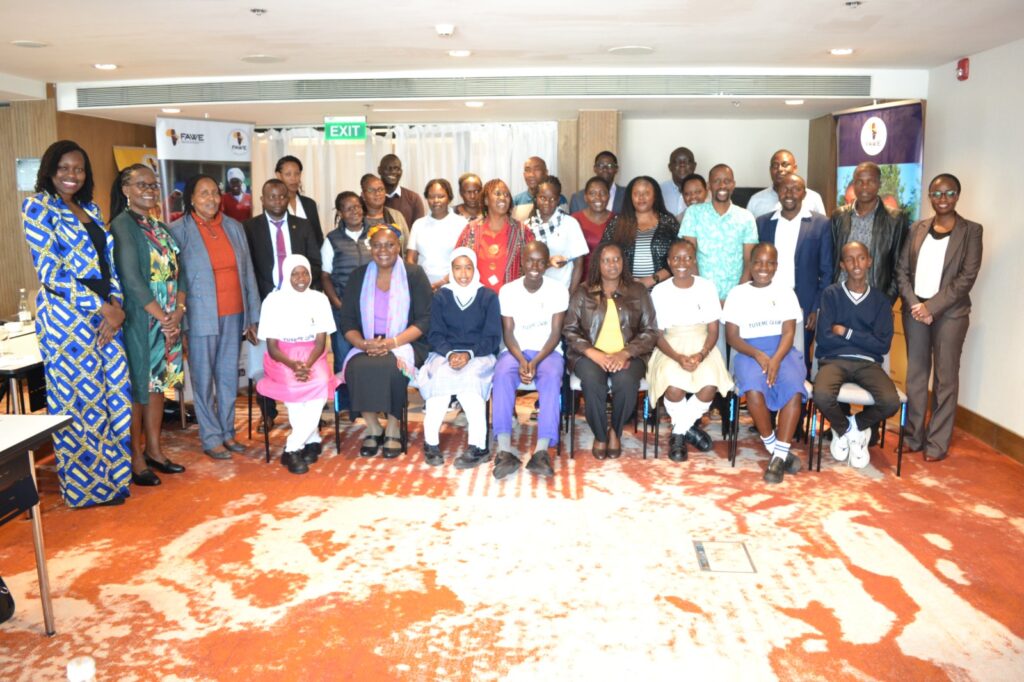
NAIROBI, Kenya – FAWE Kenya convened the GPE KIX Tuseme Project National Policy Dialogue and Dissemination Meeting at the Hyatt Regency Hotel in Nairobi. The objective of the high-level gathering was clear and ambitious: to translate evidence generated by the Tuseme model into concrete policy action that would drive sustainable, scalable change within Kenya’s education system.
The meeting brought together a broad coalition of key national stakeholders, including representatives from the Ministry of Education, the State Department for Gender and Affirmative Action, the State Department for Children’s Services, the GPE KIX Africa 19 Hub, education in crisis programme partners, as well as Tuseme club learners and teachers. Their collective presence underscored the multisectoral commitment required to address the barriers facing girls and young women in and through education.
Throughout the day, participants shared key results, lessons, and evidence emerging from the Tuseme project, which has long served as FAWE’s flagship empowerment methodology encouraging girls to “speak out” against injustices affecting their education and well-being. The dialogue identified clear policy entry points at both national and county levels, developed actionable recommendations for institutionalizing the approach, and secured a formal commitment from the Ministry of Education to integrate Tuseme methodologies into existing education policies and frameworks. Participants also agreed to engage the Teachers Service Commission on the persistent challenge of teacher transfers, which has disrupted the continuity of Tuseme clubs in several schools.
Most importantly, Tuseme club learners shaped the conversation with powerful, firsthand testimonies that moved participants and reaffirmed the urgency of the work. One learner declared, “Speaking is not disobedience.” Another added with quiet conviction, “I am not just a learner, I am a champion.” Their words served as a compelling reminder that policy discussions must remain rooted in the lived realities of the very girls they aim to serve. The meeting concluded with renewed momentum and a shared roadmap for translating evidence into sustained policy engagement, ensuring that the Tuseme approach moves beyond pilot projects and becomes an embedded feature of Kenya’s efforts to build inclusive, gender-responsive, and empowering educational environments.