
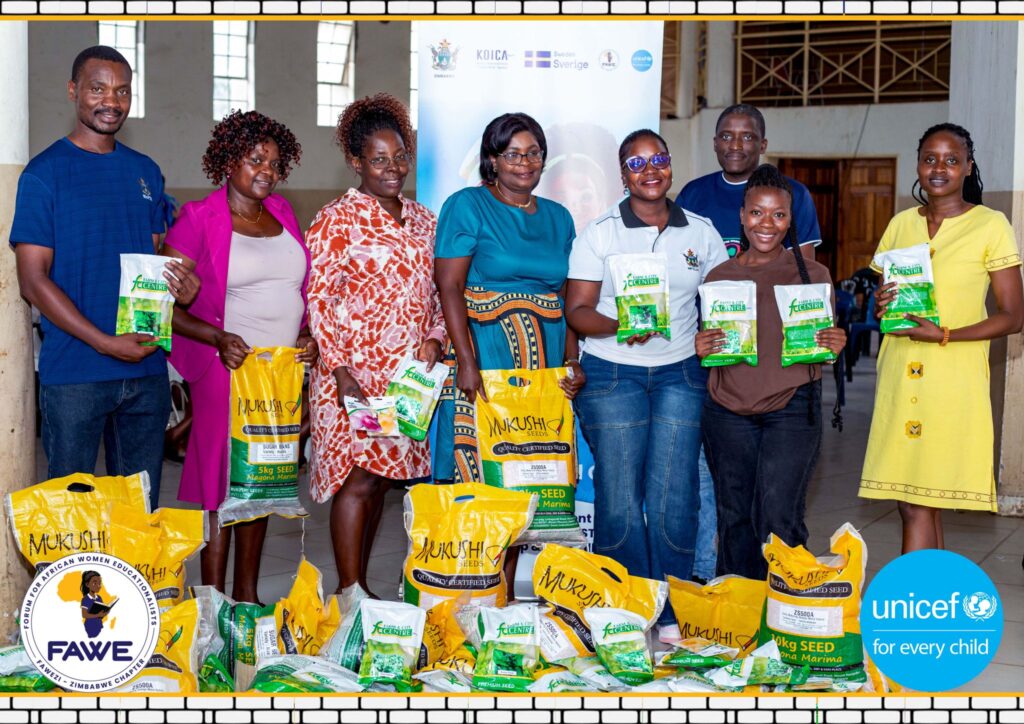
FAWE Zimbabwe (FAWEZI), with support from UNICEF, has successfully concluded a four-day Gender Responsive Pedagogy (GRP) training in Chitungwiza, marking a significant step forward in strengthening inclusive and learner-centred education. The training concluded with a practical and forward-looking intervention—the handover of seed packs to 20 participating project schools to support the establishment and strengthening of school-based nutritional gardens.
This initiative reflects FAWEZI’s holistic approach to gender-responsive education, recognising that effective learning environments extend beyond the classroom to address learners’ wellbeing, nutrition, and overall development.
Promoting Learner Wellbeing Through School-Based Nutritional Gardens
The seed packs—containing maize, beans, onions, and leafy vegetables—were distributed to support schools in developing sustainable nutritional gardens. These gardens serve multiple purposes: they contribute to improved learner nutrition, enhance practical learning opportunities, and strengthen schools’ capacity to support vulnerable learners.
By integrating nutritional gardens into school systems, FAWEZI is helping to create supportive learning environments where students can thrive academically and physically. Adequate nutrition is closely linked to improved concentration, attendance, and academic performance, making this initiative an important complement to gender-responsive pedagogy.
The gardens also serve as practical learning spaces where students can develop skills in agriculture, teamwork, and environmental stewardship. These hands-on experiences contribute to building life skills while reinforcing classroom learning in meaningful and engaging ways.
Strengthening Gender-Responsive Teaching and School Leadership
The GRP training equipped teachers and school leaders with the knowledge and tools needed to create inclusive classrooms that respond to the needs of all learners, particularly girls. Gender Responsive Pedagogy promotes equitable participation, supportive learning environments, and teaching practices that encourage confidence, engagement, and academic success for every student.
As part of the training close-out, participating schools conducted self-assessments using the FAWEZI GRP checklist, reflecting on their progress and identifying areas for continued improvement. This structured reflection process enabled schools to evaluate their readiness to implement gender-responsive practices and strengthen institutional accountability.
Schools also developed school-based action plans to guide implementation beyond the training period. These plans provide a roadmap for integrating gender-responsive approaches into daily teaching practices and ensuring sustained impact at the school level.
Advancing Sustainable and Inclusive Education
The collaboration between FAWEZI and UNICEF reflects a shared commitment to strengthening education systems that are inclusive, equitable, and responsive to learners’ diverse needs. By combining teacher capacity development with practical interventions that support learner wellbeing, the initiative promotes sustainable and long-term change.
The handover of seed packs symbolises more than the end of a training programme—it represents the beginning of action. Equipped with new knowledge, practical tools, and clear implementation plans, participating schools are now better positioned to create inclusive, supportive learning environments that promote both academic success and student wellbeing.
Through initiatives such as the GRP training and nutritional garden programme, FAWEZI continues to demonstrate the transformative power of gender-responsive education. By supporting schools, teachers, and learners, FAWEZI is helping to build education systems that empower all students—especially girls—to learn, thrive, and reach their full potential.