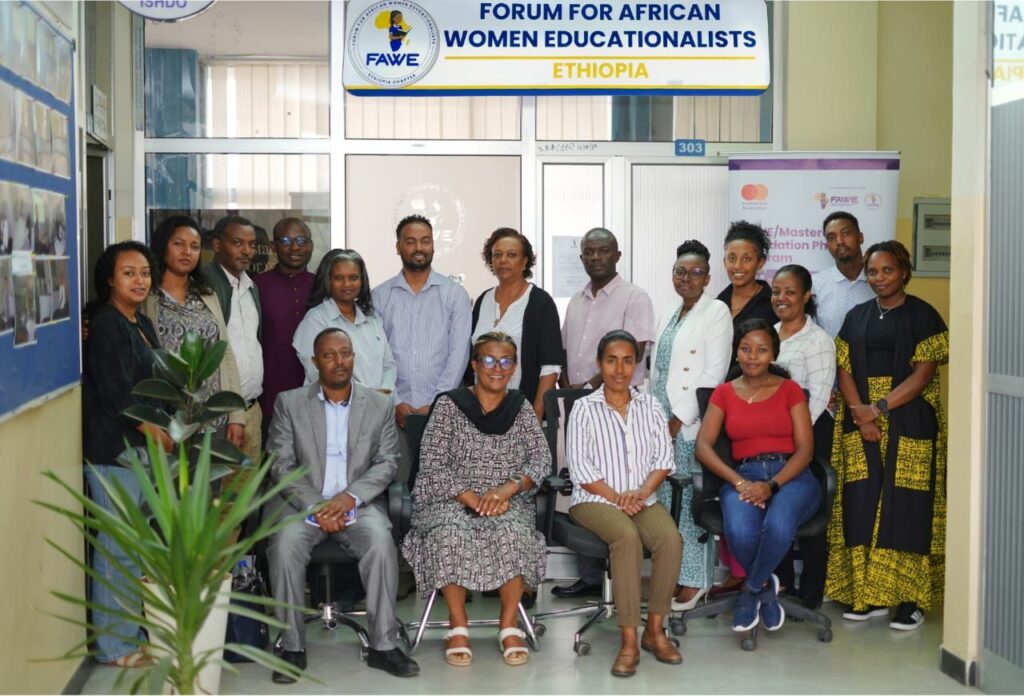
ADDIS ABABA, Ethiopia – The monitoring mission for the FAWE/Mastercard Foundation Phase II Program in Ethiopia officially commenced with a series of strategic engagements and field visits that brought together the FAWE Regional Secretariat, FAWE Ethiopia, the Ministry of Labour and Skills, and dedicated FAWE alumni. The joint effort, which took place on 28 May 2025, aimed to review programme achievements, strengthen partnerships, and ensure readiness for continued impactful implementation.
The mission began with strategic discussions at the FAWE Ethiopia office, where partners reviewed key achievements and reaffirmed a shared commitment to inclusive, impactful programming. These conversations set the stage for meaningful field engagements that brought the programme’s impact to life. The joint monitoring visit was led by Mrs. Selamawit Admasu, Executive Director of FAWE Ethiopia, and brought together delegates from the Mastercard Foundation delegation headed by Dr. Aster Minwyelet Addamu, Head of Alternative Education Pathways, alongside the FAWE Africa Regional Secretariat team led by Mr. Gordon Aomo, Senior Knowledge Management Officer, as well as representatives from the Ministry of Labour and Skills and FAWE alumni.
Direct interactions with programme participants revealed improved skills, enhanced livelihoods, and growing self-reliance. One inspiring example featured an alumna entrepreneur who had built a thriving arts business—a powerful testament to the programme’s success in creating pathways to dignified and sustainable employment. The delegation also visited Tsehay Art Store, an inspiring alumni-led entrepreneurial initiative that showcased an alumna from the Mastercard Foundation Scholars Program whose journey reflected the transformative impact of education, mentorship, and empowerment opportunities in supporting young people to transition into entrepreneurship.
The monitoring mission included a visit to Tegbare-Id Technical College, a TVET partner institution that demonstrated strong inclusion practices for persons with disabilities and internally displaced learners. The college had effectively integrated FAWE models, including Gender Responsive Pedagogy (GRP), the Extended Orientation Programme (EOP), Tuseme, and mentorship. Notably, with sign language interpreters now onboard, retention and learning outcomes had significantly improved for learners with hearing impairments. The delegation also toured the mechatronics workshop, where programme participants presented their ongoing STEM class projects, demonstrating practical skills, innovation, and hands-on learning supported under the programme.
A key highlight of the visit was an interactive session with programme participants from Addis Ababa Tegbare-id Polytechnic College and General Wingate Polytechnic College. Students shared their give-back engagements, Tuseme club activities, and personal testimonials, reflecting on how the programme had shaped their skills, confidence, leadership, and aspirations. The session also included a focused group discussion with participants, allowing deeper engagement on programme experiences and outcomes, and concluded with a vote of thanks delivered by a student representative, who appreciated the opportunity and called for the expansion of such programmes to reach more young people across Ethiopia.
Throughout the mission, robust safeguarding practices were demonstrated, alongside a collective drive toward equitable, transformative opportunities for all learners. The FAWE Africa team on the ground included Ms. Beatrice Muiyiro, Senior Finance Officer; Mr. Gordon Aomo, Senior Knowledge Management Officer; Mr. Crispus Ntala, Safeguarding Officer; and Ms. Anne Motanya, Knowledge Management Officer. Their coordinated approach to monitoring, partnership strengthening, and ensuring readiness for impactful implementation underscored FAWE’s commitment to accountability, learning, and continuous improvement. The mission created an important platform to reflect on programme progress, achievements, lessons, and the transformative impact being made in the lives of young women and men through access to TVET and STEM education opportunities in Ethiopia.